Between 2001 and 2022, agriculture was responsible for about 86% of global deforestation. Crop expansion and cattle, mostly. The FAO puts the running total at 489 million hectares of forest lost to deforestation since 1990, with 1.56 billion hectares of land now degraded, including 460 million hectares that used to be forest.
Here is the part that changes how you look at a bare field. The mirror image of that destruction is the fix. Raising tree cover on agricultural land by just 10% would sequester more than 18 petagrams of carbon, per a 2022 peer-reviewed estimate. The FAO identifies 1.5 billion hectares of degraded land best suited to exactly this repair, trees woven back into working farms and ranches.
The land is not used up. It is waiting for its trees back. This piece is about what that looks like on the ground, in your climate zone, at the scale of a yard or a small farm.
The Land Is Waiting for Its Trees Back
The numbers deserve a straight telling. The World Resources Institute’s driver data attributes 94% of permanent, non-regrowing tree-cover loss to agriculture, some 172 million hectares since 2001, an area larger than Mongolia. Brazil alone lost 12.8 million hectares to agriculture-linked deforestation between 2005 and 2015, per a 2025 review in Nature Reviews Earth & Environment.
None of this is an argument against farming. It is an argument about the shape farming takes.
The same reviews that document the loss also document the recovery pathway. When tree cover returns to agricultural land, soil carbon climbs, water tables stabilize, biodiversity rebounds, and the land starts producing again, this time on two registers at once: the annual crop and the perennial one. The question for any land steward, from a quarter-acre lot to a section of rangeland, is not whether trees belong. It is which trees, arranged how, for your rainfall and your winters.
That is a design question, and design questions have answers.
Why Trees Are Infrastructure, Not Ornament
A tree is not decoration you plant after the real work is done. A tree is the real work, compressed into a living thing that gets better at its job every year.
The canopy intercepts rainfall and releases it slowly, shaving the peak off storms and buying the soil time to absorb water that would otherwise run off and take topsoil with it. The roots drill through compaction, build aggregates, and trade sugars with mycorrhizal networks that effectively extend the root system across an entire stand of trees. Leaf litter is fertilizer, manufactured on site, delivered free. Deep roots mine minerals from subsoil no tine will ever reach and lift them into the biological loop. And the microclimate under a canopy, cooler in summer, buffered against frost and wind, is a machine for stretching growing seasons that no hardware store sells.
Each function maps to a yield: water, soil, food, climate. Strip the functions away and you are left with the aesthetic, which is what most landscaping actually buys. Keep them and you have infrastructure that appreciates instead of depreciating, and feeds you while it does.
The Evidence the Practice Works
Skeptics are right to ask whether this scales beyond homestead anecdotes. The measurement record is now strong enough to answer.
- Carbon: The 2022 Maxapress/CAS estimate puts the sequestration potential of a 10% tree-cover increase on farmland at over 18 PgC, roughly 1.83 PgC per year, comparable in magnitude to entire categories of national emissions.
- Biodiversity: Restoration meta-analyses show a 44% gain in biodiversity and a 25% gain in ecosystem services against degraded baselines.
- Economics: Restoring 350 million hectares by 2030 is estimated to return between $7 and $30 in benefits per dollar invested.
- Portfolio depth: Project Drawdown’s list of 100 substantive climate solutions includes 11 agroforestry-type approaches: multi-strata agroforestry, silvopasture, tropical staple trees, tree intercropping, indigenous tree-based management among them.
The practice is also not fringe in the institutions that matter. The USDA’s National Agroforestry Center formally recognizes five systems: alley cropping, forest farming, riparian buffers, silvopasture, and windbreaks. USDA research bulletins document the benefits in terms a rancher can bank: silvopasture cuts livestock heat stress and extends the forage season while building soil carbon against open pasture, and alley cropping can return tree-crop income that offsets the roughly 30% yield discount in the cropped alleys.
A design idea with peer-reviewed carbon math, a positive benefit-cost range, and federal cost-share support is not a lifestyle trend. It is an established practice standard with adoption lag.
A 70-Plus-Year-Old Blueprint: Yeomans and the Keyline Insight
The modern grammar for all of this was written by an Australian mining engineer named P.A. Yeomans. In the 1940s, facing eroded, flood-prone farmland at Yobarnie and Nevallan in New South Wales, Yeomans applied survey logic to water. His insight: water should be caught high in the landscape and drifted slowly from valleys toward ridges, against the natural drainage, using off-contour cultivation lines he called keylines.
The toolkit that fell out of that insight, developed between roughly 1943 and 1954, is still the backbone of dryland tree establishment: small dams placed on contour high in the catchment, linked by gravity channels, with cultivation drifting moisture out to the ridges where trees struggle most. The keyline plow won a Prince Philip Design Award in 1974.
The lesson that matters for this article is one sentence long: in dry country, water placement decides tree placement. Hold that thought for the dryland section.
Wet Tropics: Build the Jungle, Layer by Layer
Where water is abundant, the constraint is not survival. It is structure. The wet-tropical pattern, the one Andrew Millison teaches in his Oregon State permaculture courses, is to mimic the rainforest itself: a multi-story food forest with seven working layers, from canopy down to rhizosphere.
The canopy carries the staple trees: breadfruit, jackfruit, durian, or their regional equivalents. These are calorie crops that fruit for decades on deep, mostly self-fetched fertility. The understory runs banana, plantain, and citrus on the light that slips through. The shrub layer is coffee, cacao, or curry leaf. The herbaceous and ground-cover layers shade soil and outcompete weeds, and the vine layer uses every standing trunk as trellis. Indigenous multi-story agroforestry systems across the tropics have run this architecture for generations; the “food forest” is a modern rediscovery of their template.
Maintenance in the wet tropics is not watering. It is diversity pruning: keeping every layer fed with light, hacking back the ambitious, nursing the shy. In year one you plant the pioneers and the bananas for quick returns; by year five the canopy staples are closing over and the system starts managing its own microclimate. For equatorial readers working a balcony or a courtyard rather than a hectare, the same logic compresses: papaya or moringa as a container canopy, herbs and greens in the understory slots, and a drum of compost where the leaf litter would be.
Dryland: Water Harvesting Before Tree Planting
In dry country the sequence inverts. As Millison puts it in his open courseware, it takes extra water for a tree to get its roots down to where it can survive on rainfall alone. So you build the water system first, and let the trees ride on it.
The design grammar is the Yeomans landscape profile, four zones from ridge to creek:
- Catchment forest on the ridge tops, the sponge that slows and absorbs what falls.
- Retention zone at the slope break, where on-contour swales and infiltration basins park water in the soil.
- Irrigation zone below, where the planted rows, often wide-spaced alley cropping, draw on that stored moisture.
- Reconstitution zone at the valley bottom, wetlands and creeks rebuilt, the system’s outflow kidney.
Within that frame, trees establish in “pioneer nuclei”: clusters of nitrogen-fixing, drought-deciduous species planted close enough to shelter each other, mesquite and acacia types in the American Southwest, on the harvested water of a swale or basin. Wide-row alley cropping fits between. The rule is blunt: a tree planted in dryland without water harvesting is not a tree, it is a bet against the rain. The earthworks shift the odds.
Temperate: Design With Succession, Not Against It
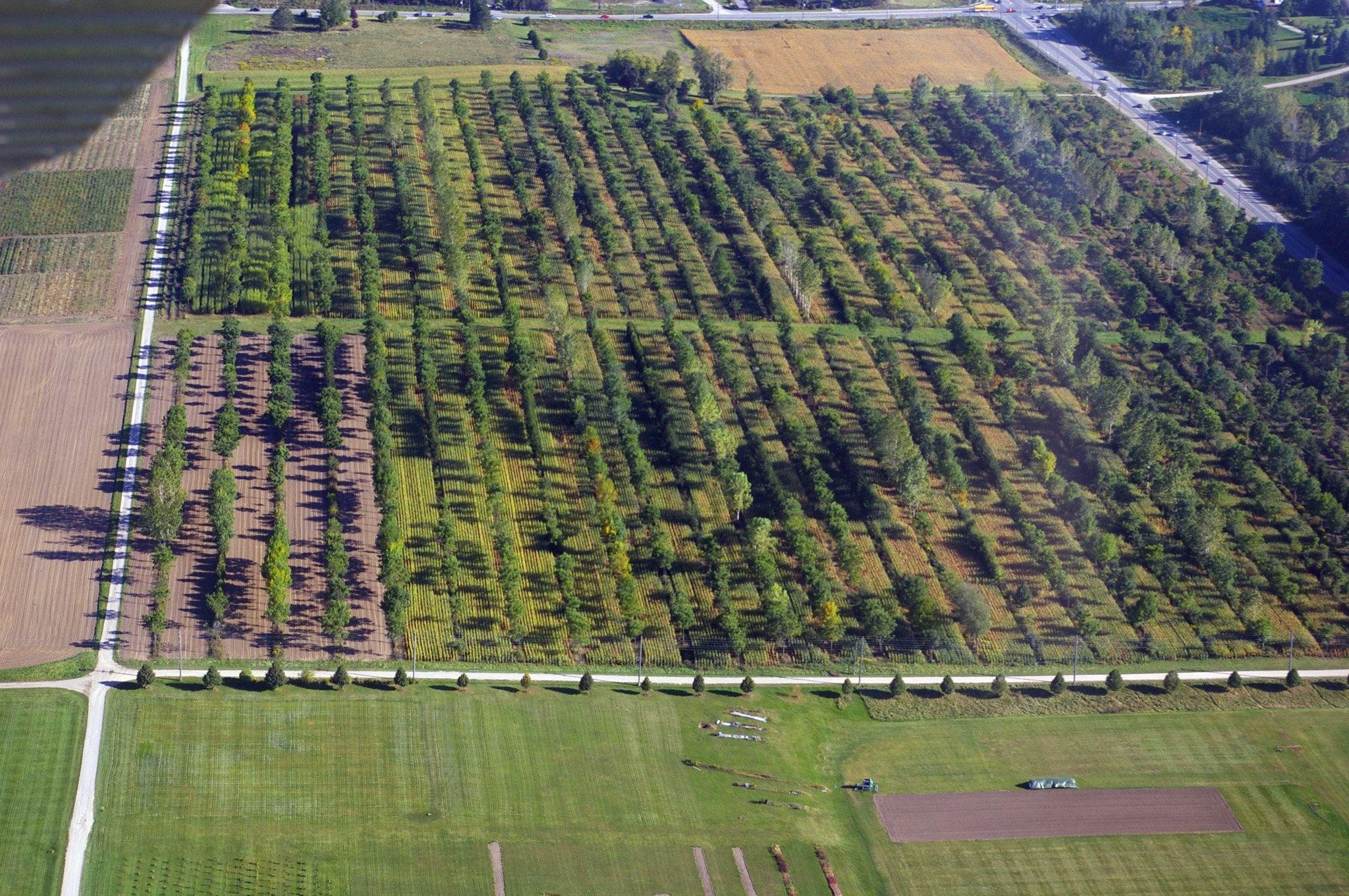
Temperate land wants to be forest. Left alone, it reverts. So in temperate zones the skill is not coaxing trees to grow; it is managing a succession that happens anyway, and aiming it at yields you chose.
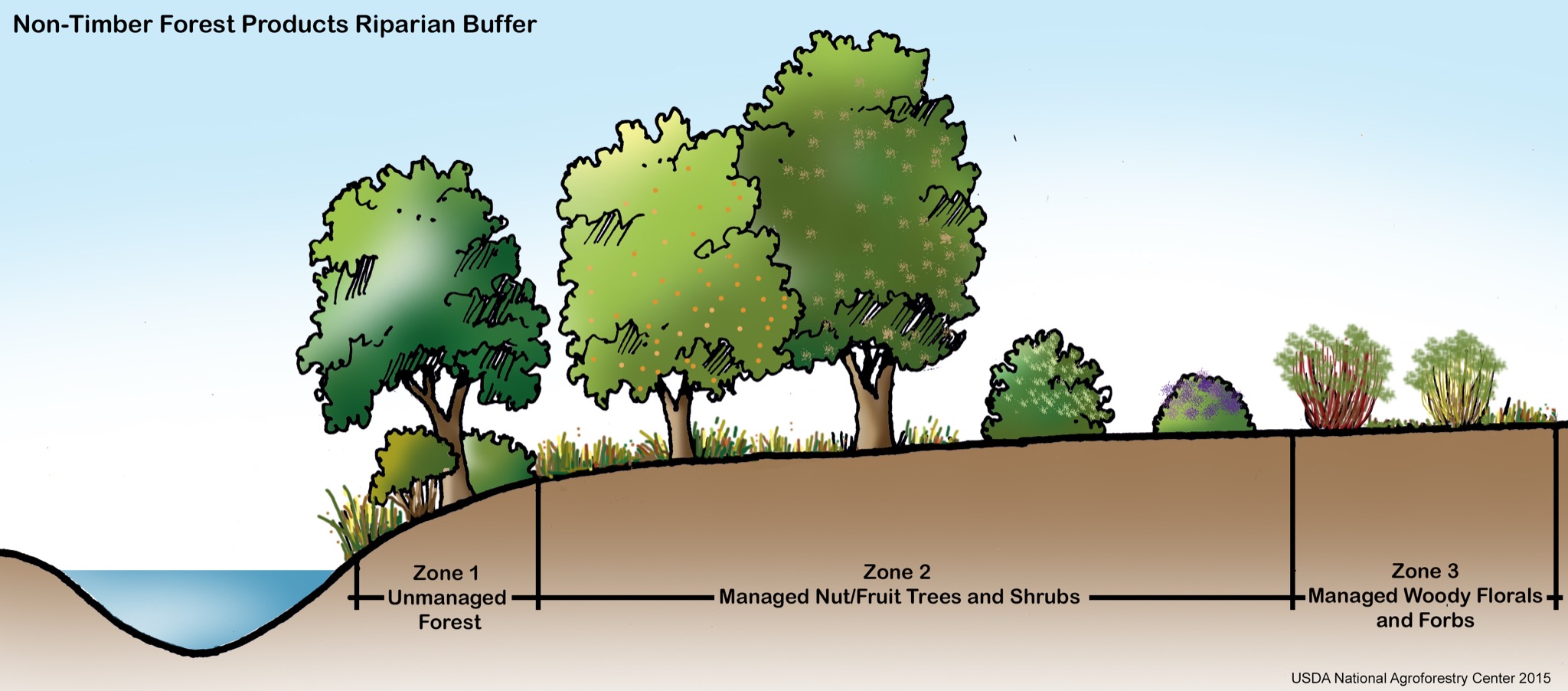
Millison’s temperate patterns give three levers. The first is the solar amphitheater: south-facing (north-facing in the southern hemisphere) arcs of planting that trap sun and shed cold air, warming a pocket of orchard by a few degrees, which is often the difference between a crop and a frost-black blossom. The second is the hedgerow, which is a windbreak, a wildlife corridor, and a yield row in one: hazel or berry canes near the ground, apple and pear on the sun side, timber species on the windward.
The third lever is silvopasture as a dial: tree rows planted through pasture, thinned or released as the climate pushes wetter or drier and tips the balance between forage and canopy. If you already run a vegetable plot, the data-driven approach to succession planting is the annual-crop companion to this logic: same scheduling discipline, measured in weeks instead of decades.
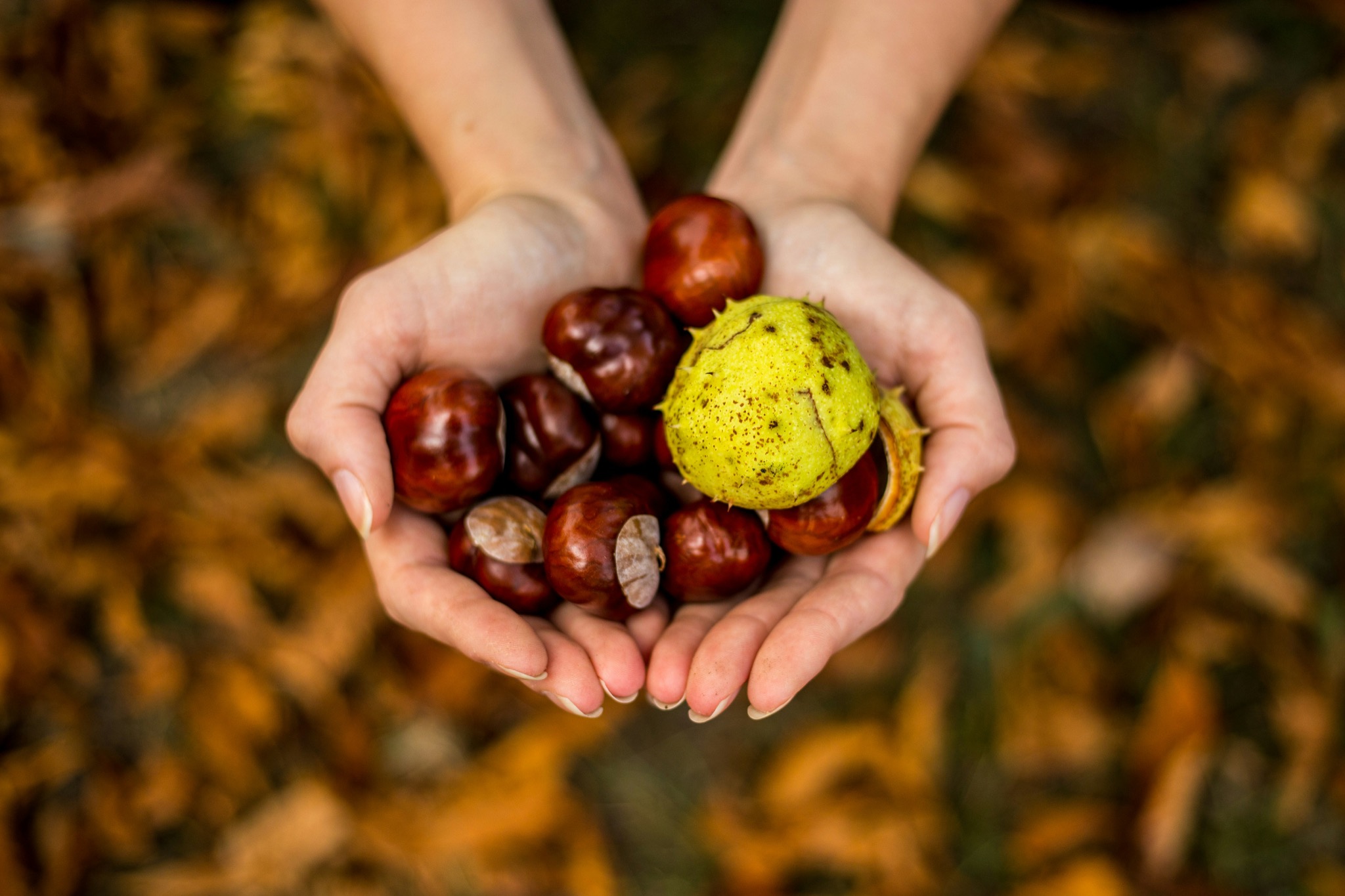
The calorie anchor in cold climates is the nut tree. A chestnut planting hits first meaningful bearing around year ten and then produces staple carbohydrate for a century; oak, hickory, mulberry, pear, and apple rows fill out the system. Seaberry (hippophae) is the third-layer gem, a shrub heavy in omega-7 that permaculture writers call “fish on a bush,” your medicine hedge between the pasture and the wind. If that hedge appeals, the home apothecary playbook covers what to do with what it gives you.
What It Yields, Year by Year
The payoff curve is front-loaded with work and back-loaded with harvest:
| Year | What is happening | What you are doing |
|---|---|---|
| 1 | Earthworks, pioneers, mulch, mostly bare ground | Swales, basins, soil repair, heavy planting |
| 3 | First berries and understory fruit, soil visibly darker, fewer inputs | Pruning for structure, gap-filling, observation |
| 5–10 | Understory in full production, fodder and microclimate shifts obvious | Managing succession, first nut yields approaching |
| 10–15 | Nut staples bearing, canopy closing, the system self-managing more each season | Harvest, light management, selective replacement |
The chestnut decade, year ten, is when a temperate planting stops being a project and starts being a pantry.
The Suburban Compression: Same Patterns, Smaller Canvas
None of this requires a farm. The patterns compress to a tenth of an acre without losing their logic.
A suburban lot runs a three-layer version: dwarf apple or pear on M27 rootstock as the mini canopy, currants or blueberries as the shrub layer, comfrey and clover holding the ground. The rain garden where the downspout dumps is the retention zone from the dryland profile, sized for your roof. The boundary hedge is the windbreak. Renters get the balcony version: a container tree where the light is best, herbs in the understory slots, and a watering can playing the role of the swale. It is the same renter-accessibility math that made plug-in balcony solar the first PV a renter could actually own, applied to food. The scale changes, the grammar does not.
This is also where the practice stops being solitary. A street of ten yards running the same logic is a corridor; a neighborhood plant-swap nursery is the propagation backbone; and if your block shares big tools through a neighborhood tool library, the same model covers the chipper and the trailer that small tree work needs.
Start Where the Water Is
The universal first step is not buying trees. It is reading the land’s water: where it enters, where it slows, where it exits, and what it takes with it when it leaves. One slow walk along the contours, in the rain if you can manage it, tells you more than any catalog.
Then plant the pioneers this season, three of them, watered in and mulched, and build the one earthwork your site is begging for. The trees you plant now are infrastructure your future self harvests from, and unlike anything in a box from a store, they improve while you sleep.
Why This Matters
The 86% figure that opened this article is usually read as an accusation against agriculture. It is better read as a specification. The tool that cleared the land, applied in reverse, is the most cost-effective climate and food-security technology we have, with more than seventy years of design grammar behind it and federal practice standards beside it.
Every yard and field that runs tree crops is a small reversal of the clearing. Enough of them in a watershed, and the reversal stops being small. The degraded land is waiting. Plant like it.
Sources
- Andrew Millison, “Using Trees to Heal the Land” (seed video): https://www.youtube.com/watch?v=SNf_rwzyIEo
- Millison/OSU, Introduction to Permaculture, “4.2: Trees”: https://eng.libretexts.org/Bookshelves/Environmental_Engineering_(Sustainability_and_Conservation)/Introduction_to_Permaculture_(Millison)/04%3A_Climates/4.02%3A_Trees
- The Regenerators, “Healing farm designs”: https://theregenerators.org/stories/healing-farm-designs/
- WRI, forest loss driver data: https://www.wri.org/index.php/insights/forest-loss-drivers-data-trends
- FAO, State of the World’s Forests 2026: https://openknowledge.fao.org/server/api/core/bitstreams/2266fca9-6b6b-4296-855e-4a93e57f4118/content
- FAO, SOFO 2022 In Brief: https://openknowledge.fao.org/server/api/core/bitstreams/5da0482f-d8b2-44e3-9cbb-8e9412b4ea86/content
- Maxapress/Carbon Footprints, global carbon sequestration potential of agroforestry: https://www.maxapress.com/article/doi/10.48130/CAS-2022-0003
- Nature Reviews Earth & Environment, global deforestation footprint of agriculture: https://www.nature.com/articles/s43017-025-00660-3
- USDA, Agroforestry overview: https://www.usda.gov/forestry/agroforestry
- USDA NAC, Silvopasture practice bulletin (AN-8): https://www.fs.usda.gov/research/publications/an/silvopasture-an-agroforestry-practice-an8-final-508.pdf
- USDA NAC, Alley Cropping practice bulletin (AN-12): https://www.fs.usda.gov/nac/assets/documents/agroforestrynotes/an12ac01.pdf
- Yeomans, The Keyline Plan (full PDF): https://soilandhealth.org/wp-content/uploads/GoodBooks/The%20Keyline%20Plan.pdf
- Wikipedia, Keyline design: https://en.wikipedia.org/wiki/Keyline_design
- AgriPure, food forest layers: https://agripure.org/articles/food-forest-layers
- Grow Perma, 7 layers of a food forest: https://growperma.com/blog/7-layers-of-a-food-forest-understanding-vertical-structure
Related reading
Growing Sprouts at Home: Seed to Sandwich in Five Days, at About $1 a Jar
The complete home sprouting guide: which varieties to grow, what they cost vs. retail, the 2026 safety rules, and how many jars a household of …
The Windowsill Herb Garden That Actually Produces: Light, Soil, and the 5 Herbs Worth Growing
Most culinary herbs want eight hours of direct sun a day; a winter windowsill gives a fraction of that. Measure your light first, then pick …
A Two-Week Pantry Buffer for Normal Life: What to Stock, What to Rotate, and the Under-$100 Starter List
Build a two-week pantry buffer for under $100 per person: what to stock, the FIFO rotation habit that keeps it from becoming waste, and the …