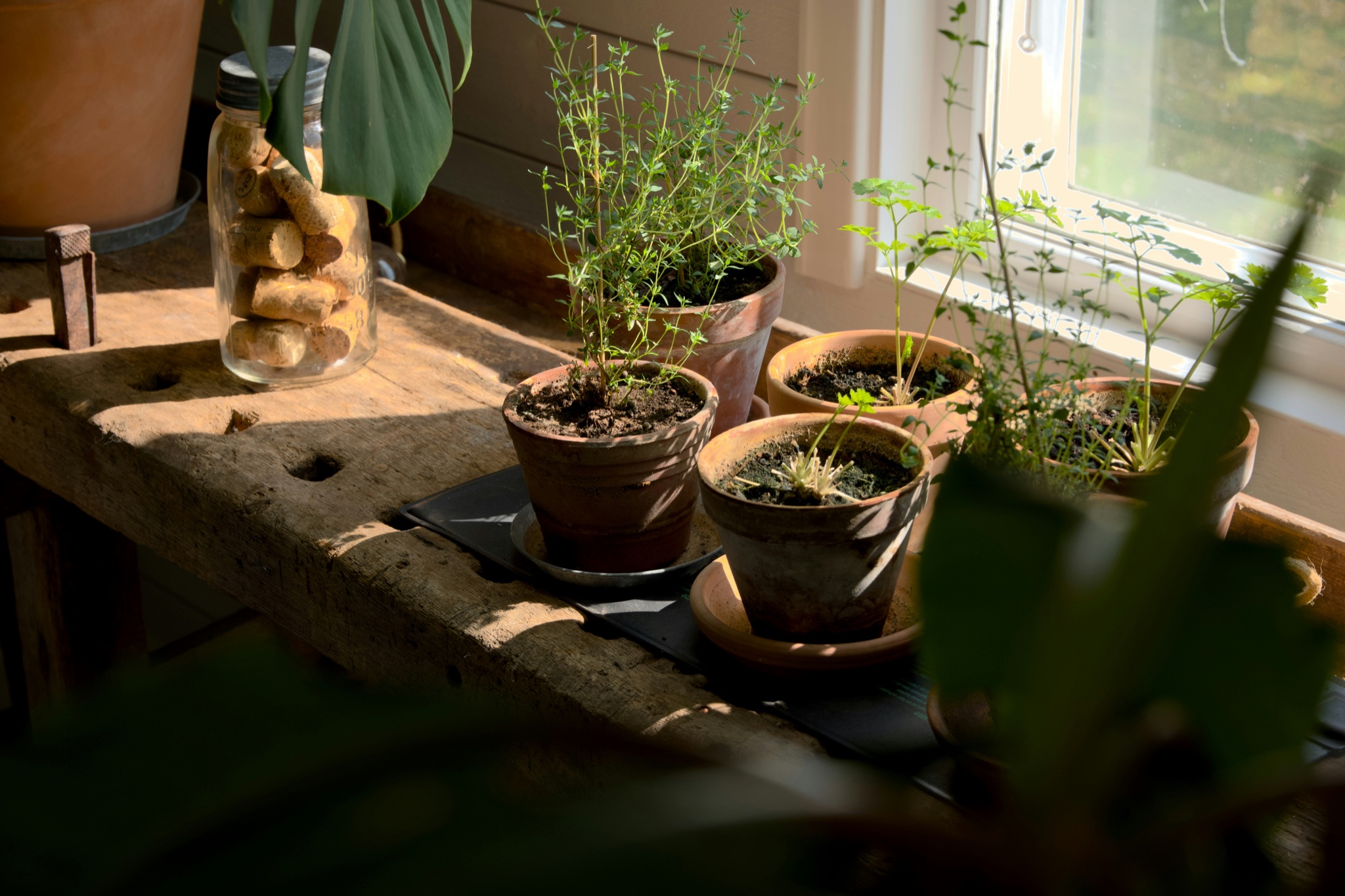
Most culinary herbs want about eight hours of direct sun a day. Your windowsill in February, in most of the northern half of the country, gives you a fraction of that, and the gap between those two numbers is where most windowsill herb gardens go to die.
I want to save you that disappointment. It is not neglect, bad luck, or a missing green thumb. It is a light shortfall that starts before you buy a single seed. Measure the light you actually have, and the rest (which herbs, which pots, whether a $25 bulb is worth it) answers itself.
Start With the Light Math, Not the Romance
Iowa State Extension’s baseline is plain: most culinary herbs need roughly eight hours of direct sun per day, and “most want eight or more.” That is direct sun on the leaves, not a bright room, and the difference is why so many well-intentioned sill gardens fizzle by February.
Direct outdoor sun peaks around 10,000 foot-candles, per University of Maryland Extension. Indoors, intensity drops fast with distance from the glass, and curtains, insect screens, shade from neighboring buildings, the season, and the cleanliness of the window all take their cut. A plant three feet inside a sunny room lives in a different climate than one at the glass.
Extension services do not fully agree on the floor, and the disagreement is instructive. Penn State sets a 6-hour baseline for most herbs but lists a tolerant tier (lemon balm, chives, cilantro) that manages on 2 to 6 hours of direct sun. Maryland calls 5-plus hours in a south or west window workable. Iowa State’s 8 hours is the thrive number, not the survive number. Practical takeaway: below about 4 effective hours, you are not growing herbs without a light; 4 to 6 hours limits you to the tolerant tier.
Winter makes the math harsher. On the December solstice, Minneapolis gets 8 hours 46 minutes of daylight with the noon sun just 22 degrees above the horizon, and Seattle gets 8 hours 25 minutes with the sun at 19 degrees, per Quartz’s solstice analysis and Deconstruct Sun’s Minneapolis table. That is total daylight, not direct sun on your sill; with the sun that low, buildings and bare trees shade most windowsills for hours at a stretch. An unobstructed south window in a northern city in January delivers maybe 3 to 5 effective hours.
The 2-Minute Sill Test

Before you buy anything, walk to your best window with your phone. Free light-meter apps read foot-candles directly; Virginia Tech’s DLI primer (SPES-720) is the reference for converting those into PPFD and daily light integral, but a foot-candle number is enough for the first decision.
Hold the phone where the plant would sit, glass-side, at noon: under 500 foot-candles most of the day means a north window or deeply shaded sill: no herbs without a grow light, so skip to the bulb section. 500 to 1,000 foot-candles for 4-plus hours means an east or bright west window: you are in the tolerant tier, and chives, mint, and parsley are your herbs. 1,000-plus foot-candles for 6-plus hours means a genuine south window: full five-herb setup, Mediterranean pair included.
One free habit: plants lean toward light; every extension service from Penn State to Vermont gives the same fix: a quarter turn every few days.
The Five That Pay Back
Iowa State’s shortlist of herbs that tolerate lower indoor light, low humidity, and cooler temperatures: parsley, mint, chives, basil, oregano, cilantro, and thyme. Cross-reference that with perennial life cycles, Missouri Botanical Garden’s per-species minimums, and Iowa State’s harvest rules, and five earn their sill space.
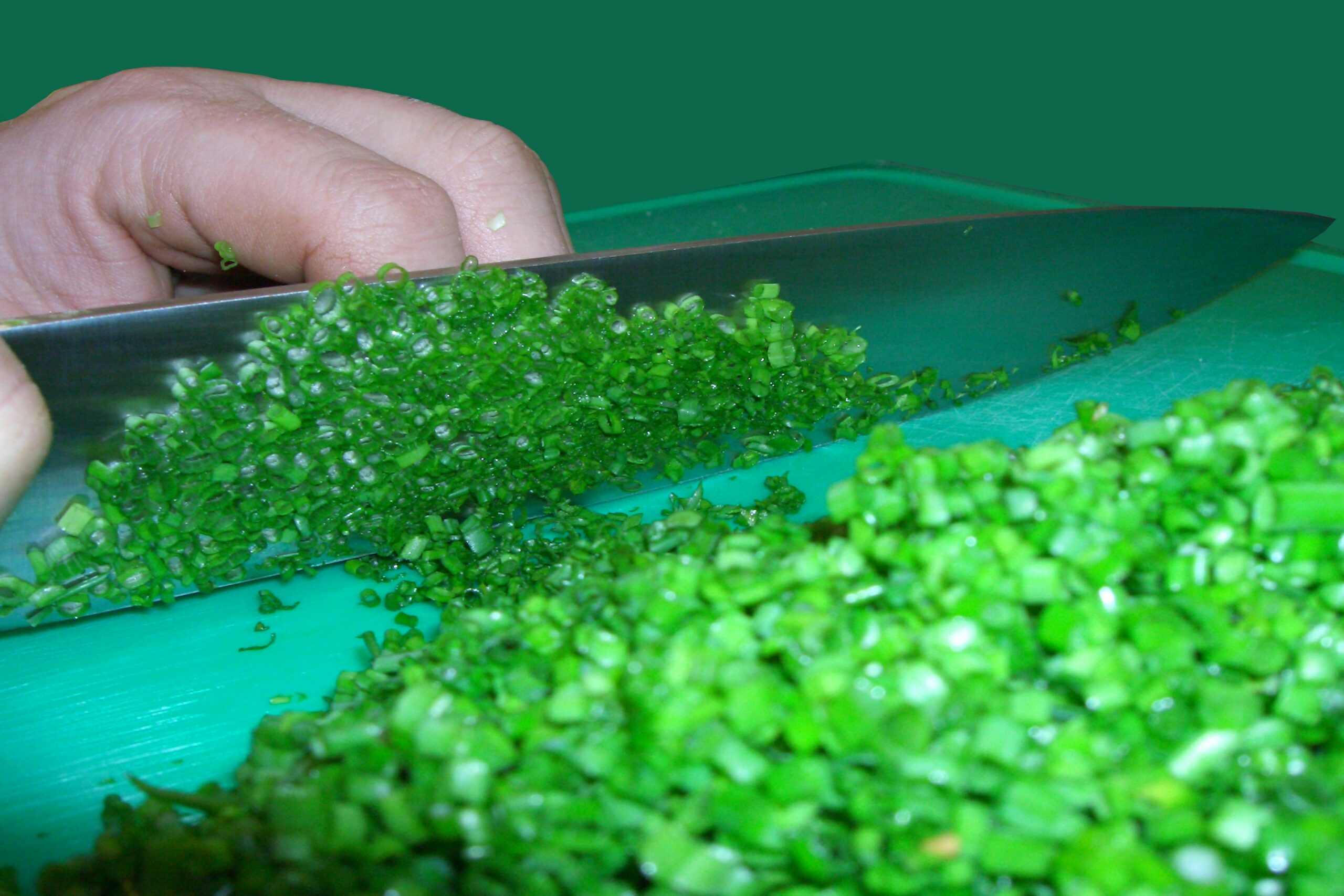
Chives. Penn State’s tolerant tier, and Missouri Botanical Garden notes chives “do very well in windowsill containers.” A perennial, so one $4 starter plant is a multi-year purchase. Harvest only the top third, and a healthy plant regrows a snippable third repeatedly: expect a tablespoon or two of snips a week in season, not a farmer’s market stall. That garnish-scale yield is the real scale for everything on this list, and it is still worth it: cut what you need, when you need it, with no plastic clamshell wilting in the fridge.
Mint. The shade champion. Missouri puts its minimum at 2 to 3 hours of sun, and unlike most herbs it tolerates wet soil, which forgives beginner watering habits. Top-third harvests, aggressive regrowth. Grow it alone in its pot; it bullies anything sharing soil.
Parsley. Partial shade or full sun, per Missouri. As a leafy biennial it is the one herb here you can cut back hard; leave 4 to 6 inches of stem per Iowa State’s FAQ and it regrows. Slow from seed; buy the starter plant. Retail anchor, per Produce Price Tracker republishing USDA AMS data: plain parsley averaged $0.79 a bunch in the week of October 30, 2026, within a historical range of $0.79 to $1.28. Cheap at retail, yes, but the payback is freshness and zero waste, not fortune.
Oregano and thyme. The Mediterranean pair: the best kitchen value of the five and the fussiest about light. Oregano tolerates dry soil and neglect but wants strong sun; thyme needs full sun and dislikes low humidity. Both earn their spots only on your sunniest sill. Keep thyme away from the radiator, and mist the air around it if your winter air is desert-dry. Both are perennials with top-third harvests. If the same plants pull you toward the medicinal side, our home apothecary guide covers that tier.
The Free Bonus: Scallions
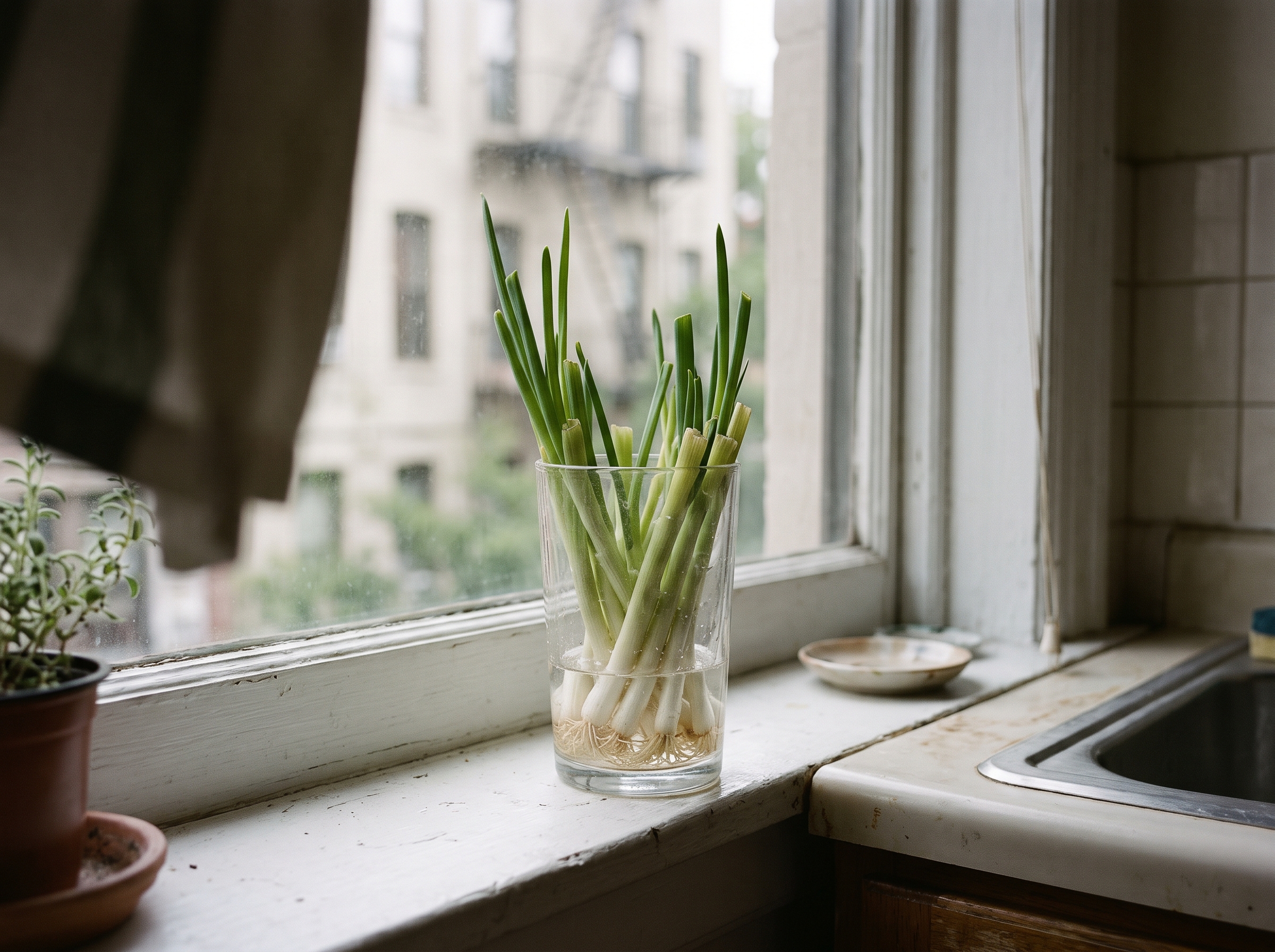
Both Iowa State and Washington State University Extension endorse regrowing grocery-store scallion roots in a glass of water: new shoots in 1 to 2 weeks, harvestable for months, $0 startup. One caveat from Iowa State: the bulbs exhaust their reserves after a few months, so refresh from the next grocery bunch. Not a perpetual machine, just a very cheap one.
The Shelf-Decor Physics: Basil and Cilantro
Every beginner-herb list includes these two, and indoors, both are traps. The failure is physics, not gardening skill.
Basil needs 6 to 8 hours of bright light and cannot survive below 50°F, per Penn State; a cold winter sill can kill it before the light shortfall gets its turn. University of Minnesota Extension is blunt: bring basil indoors for winter and “you may have to install artificial lights and run them for 10 to 12 hours daily since indoor light will not be enough.” Even then it is an annual that flowers and dies; plan on new seed each spring.
Wholesale terminal markets put basil at $6.00 to $8.00 a pound in Boston on October 8, 2026, per USDA AMS, exactly why people keep trying, and exactly why the disappointment stings. If you must have indoor basil, the path is a grow light over a warm spot. On a dim sill, it produces sad, sparse leaves until it gives up.
Cilantro is the second classic letdown, for a different reason: it is a cool-season annual programmed to bolt (flower, set seed, turn bitter). Bolting is driven by heat (above roughly 75 to 85°F) and day length, and a warm kitchen windowsill is precisely the environment that accelerates it. The beginner instinct (sunniest, warmest spot) buys you a week of leaves and a flower stalk. The extension-service fix: treat cilantro as a re-sown crop, fresh seed every 2 to 3 weeks, not a permanent plant.
The Payback Table
This is the same line-item cost-math pattern as our homemade sauerkraut breakdown, applied to the sill. The setup, costed with starter plants because November is not seed-starting season: five 6-inch terracotta pots at roughly $3 to $5 each, one bag of quality potting mix at roughly $8 to $12, and five starter plants at $4 to $10 each, per Indoor Gardening HQ’s 2026 cost guide. Seeds run $2 to $5 a packet if you start in spring. Total: roughly $43 to $87.
Against retail anchors, date-stamped: parsley $0.79 a bunch (USDA AMS data via Produce Price Tracker, week of October 30, 2026). Grocery herb packets run $2 to $3 for a clamshell that wilts half-used, a store check, not a government series.
| Line item | Cost | Notes |
|---|---|---|
| Five 6-inch terracotta pots | ~$15–25 | Terracotta dries faster than plastic — an advantage, per Iowa State |
| Bag of potting mix | ~$8–12 | Never garden soil indoors (Illinois Extension) |
| Five starter plants | ~$20–50 | $4–10 each; seeds are $2–5 a packet in season |
| Startup total | ~$43–87 | One-time; perennials refill it for years |
| Parsley, retail anchor | $0.79/bunch | USDA AMS, week of Oct 30, 2026 |
| Grocery herb clamshell | ~$2–3 | Store check; the real waste item |
| Grow bulb (optional) | ~$25 | Screw-in LED; ~$1.60/month electricity |
| Basil, wholesale reference | $6.00–8.00/lb | USDA AMS Boston terminal, Oct 8, 2026 |
The break-even framework, assumptions stated: a $4 chive or mint starter plant that replaces one grocery bunch every two months — $1.50 against the $2 to $3 store-check clamshells once you count the half that wilts — pays for itself within the first year, then keeps producing; both are perennials. The ranking depends on your window: blazing south sill, oregano and thyme win; modest east window, chives and mint. The strongest case belongs to cooks who routinely buy $2 to $3 herb packets and throw half of each one away, and a windowsill plant eliminates the throw-away half.
And basil at $6 to $8 a pound wholesale looks like a money printer until you multiply it by realistic ounces harvested indoors without a grow light: very few. Price per pound times imagined pounds is the trap; price per pound times actual snips is the calculation.
Setup Fundamentals
The boring details decide success more than variety choice.
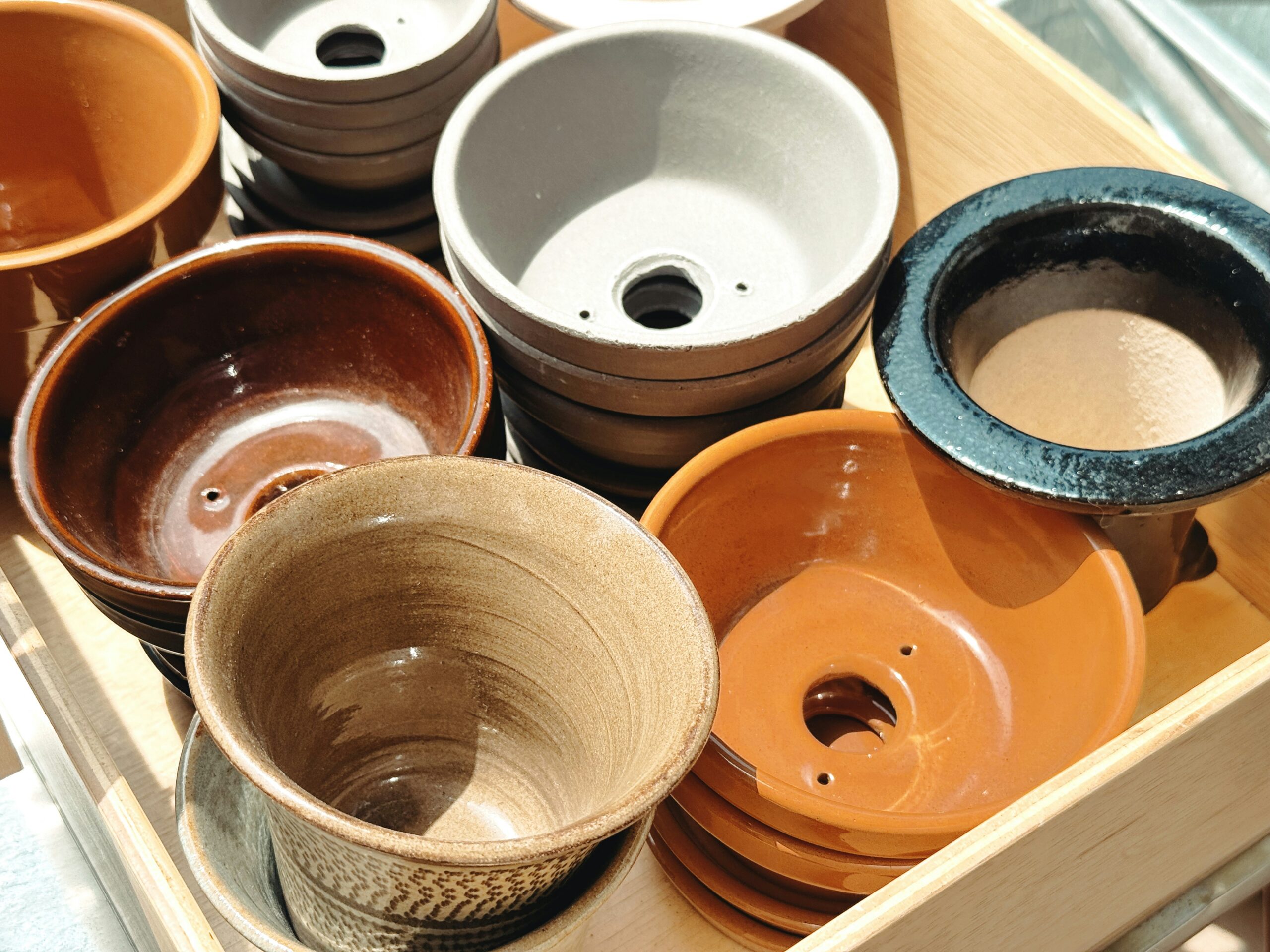
Drainage is non-negotiable. Every container needs a drainage hole, per Iowa State, Illinois, and Maryland. Use a quality potting mix, never garden soil (Illinois); Maryland’s recipe is 2 parts soilless mix to 1 part perlite. Containers too large stay wet too long, and one species per container; Illinois sets a 6-inch minimum diameter.
Watering discipline: the number one killer is you. Iowa State’s phrasing: “most herbs do not tolerate wet soils.” Let the mix dry between waterings. Mediterranean herbs (oregano, thyme, sage, bay) should dry slightly between; basil is the exception that wants consistent moisture.
Feed lightly. Water-soluble fertilizer at half to quarter strength, at most every two weeks during growth, and skip it in winter, per Iowa State and Illinois; over-fertilized herbs grow lush and taste like nothing. Pinch flower buds to keep energy in the leaves.
The Grow-Bulb Decision
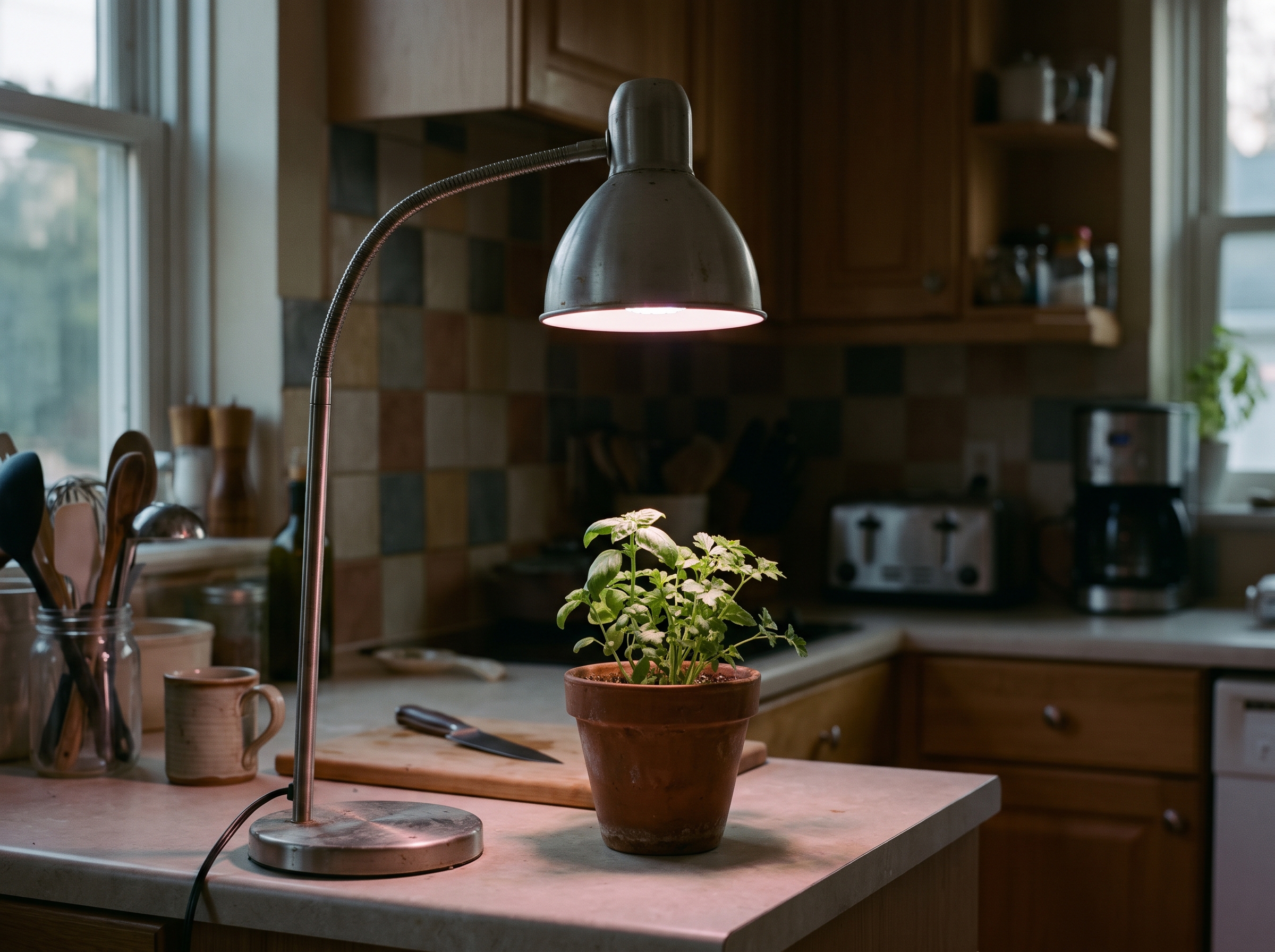
If your sill test came in under 500 foot-candles, or you are north-facing, the question is not whether to add light but what kind. The entry option is a $25 screw-in grow bulb in a desk lamp, running about $1.60 a month in electricity (0.024 kW × 14 hours × 30 days × roughly $0.16 per kWh). Illinois Extension’s conversion rule is why the timer matters: about 2 hours of supplemental light replaces 1 hour of natural light, so the bulb runs 12 to 16 hours a day, not the 6 to 8 a sunny window provides.
Distance matters as much as wattage; Iowa State puts fluorescent tubes 6 to 12 inches from foliage and LEDs 12 to 24 inches. A $150 multi-fixture setup earns its price only at food-growing volume; for a five-pot sill garden, the $25 bulb converts the decor-tier herbs (basil especially) into producers and extends the winter season for everything else.
The Winter Reality
Illinois Extension names light and humidity as the two primary restricting factors for indoor winter growth, and November through February delivers both: under 9 hours of daylight, low-angle sun, and forced-air heat drying the air. (If the low-light months drag on you too, the evidence on vitamin D and indoor life is worth a read.)
Set expectations by tier. On a bright south or east sill, chives, mint, and parsley slow down but keep producing: harvest-in-slow-motion, a tablespoon when you need one.
Oregano and thyme survive but stall until spring. Basil sulks below 50°F; cilantro bolts in the warm room. In a dark apartment, winter means the perennials plus scallion regrowth, not a supermarket replacement, and any article that promises one is selling you a photograph. The $25 grow bulb is the single upgrade that changes this equation, at $1.60 a month to run.
One Warning Before You Plant: Pets
Four of the five recommended herbs interact with cats and dogs:
Chives are a genuine hazard: the ASPCA flags them for N-propyl disulfide, which causes Heinz-body hemolytic anemia in dogs and cats. Symptoms include vomiting, weakness, and elevated heart rate. This is not a “large amounts only” footnote. If you have cats that chew plants, grow chives somewhere they cannot reach, or skip them. Mint can cause vomiting and diarrhea in large ingestions (the essential oils are the problem). Oregano is a mild GI irritant. Parsley appears on ASPCA-family lists as toxic in large amounts (photosensitization). Thyme is not on the ASPCA toxic list, the only one of the five with no flag at all. If a pet does get into any of these, the ASPCA Poison Control line is (888) 426-4435.
The main indoor pest is spider mites on the higher-light herbs (the rosemary and sage tier), managed with humidity and washing, not sprays, so there is no pesticide question to weigh against the pet question.
What to Do This Week
- Today: run the 2-minute sill test. Phone, free light-meter app, best window, noon. The number you get picks your herbs.
- This weekend: buy the setup: five 6-inch terracotta pots with drainage holes, one bag of potting mix, and starter plants of chives, mint, parsley, plus oregano and thyme only if your sill test supports them. Save the scallion roots from your next grocery bunch and stand them in a glass of water.
- Ongoing: water only when the mix dries, rotate the pots every few days, pinch buds, skip fertilizer until spring. If the light reading was grim, put the $25 grow bulb on your list; it is the one purchase that turns a dark-apartment sill from decoration into a small, reliable food source.
A windowsill herb garden is not a farm, and it will never replace the produce aisle. What it replaces is the $2.99 clamshell of parsley that dies in your crisper drawer, the last-minute store run for a garnish, and the assumption that food only comes from a store. It starts with a light reading and a $4 plant.
Related reading
Growing Sprouts at Home: Seed to Sandwich in Five Days, at About $1 a Jar
The complete home sprouting guide: which varieties to grow, what they cost vs. retail, the 2026 safety rules, and how many jars a household of …

Using Trees to Heal the Land: Tree-Crop Permaculture by Climate Zone
Agriculture drove 86% of deforestation. The fix is the mirror image: the right trees in the right place, by climate zone, with the numbers to …
A Two-Week Pantry Buffer for Normal Life: What to Stock, What to Rotate, and the Under-$100 Starter List
Build a two-week pantry buffer for under $100 per person: what to stock, the FIFO rotation habit that keeps it from becoming waste, and the …