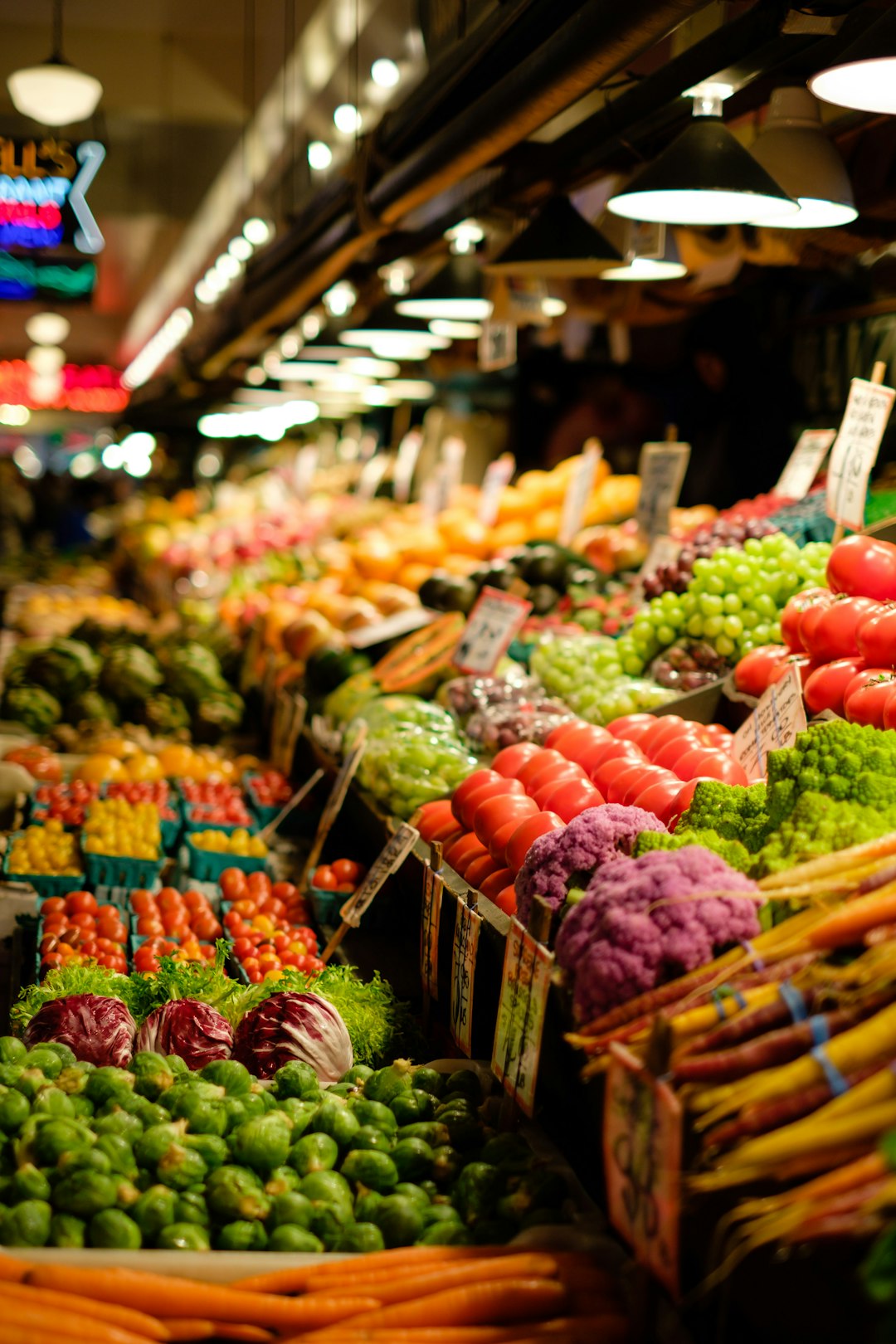
A jar of raw, live-culture sauerkraut on a refrigerated grocery shelf costs ten dollars. The head of cabbage two aisles over costs three.
There’s also a farmers’ market three miles away selling cabbages picked yesterday morning, often for less than the grocery’s organic version. And there’s a packet of cabbage seeds at the hardware store for about three dollars that, planted now, will give you five or six full heads by October. All four of these paths end up as the same thing on your plate — a jar of fermented cabbage, alive with probiotics, that keeps for months.
The cost gap between them, fully loaded with fuel and time, is wider than most household budget conversations admit. The cheapest path is almost never the one most people are on. The case for fermenting your own food usually gets argued on health or sovereignty grounds. Both are real. But the case that actually moves people in a year of rising produce prices and rising fuel prices is the one that goes line item by line item. So that’s what this is.
Why the Math Matters More Right Now
Two compounding price stories are running through every American household’s food budget in mid-2026. Fresh vegetable prices rose 5.4% year-over-year through February, with lettuce up nearly 14% and tomatoes up over 22% in March alone. Reporting attributes part of the volatility to oil and fertilizer costs flowing downstream from upstream supply disruption.
That upstream disruption is also showing up directly at the pump. The national average gas price was around $4.48 per gallon in early May, up roughly 50% from the start of the year. One analysis estimates the average household will spend $857 more on gas in 2026 than in 2025 — about $100 to $200 more per month at the pump for middle-income families.
Compound those: produce is more expensive, and the trip to buy it is more expensive too. For a household making two grocery runs a week — say, ten miles round-trip in a 25 MPG car — the fuel alone is roughly $185 a year, before anything goes into the cart. The math gets uglier when the produce-aisle prices and the gas prices both keep climbing in the same quarter.
This is where fermentation as a household strategy stops being a wellness story and starts being a budget story. The cheapest way to eat probiotic, raw, vegetable-forward food in 2026 has nothing to do with a grocery cart. The expensive way is the default.
The Four Paths
For every household that wants to eat a quart of raw sauerkraut a week — call that the baseline ferment “dose” — there are realistically four ways to get there:
- Buy finished raw kraut at the grocery store
- Buy cabbage at a conventional grocery store and ferment it yourself
- Buy cabbage at a farmers’ market or food co-op and ferment it yourself
- Grow the cabbage yourself and ferment it
We’ll run each one at full cost — sticker price, transport, time — and see where the math actually lands.
Path 1: Buy It Done
The convenience path. Open the lid, eat the kraut.
The market for raw, refrigerated lacto-fermented foods is now a real category, dominated by a handful of brands worth knowing about. Wildbrine’s raw organic sauerkraut runs about $8 for an 18-ounce jar at most natural grocers, or $11.49 for a 50-ounce (1.5L) tub at warehouse-club pricing. Farmhouse Culture goes for around $7–9 per 25-ounce jar at retail. Bubbies, which is widely cited as a “fermented” sauerkraut, uses a low-temperature process that slows fermentation without fully pasteurizing it — debated as truly raw, but generally considered probiotic.
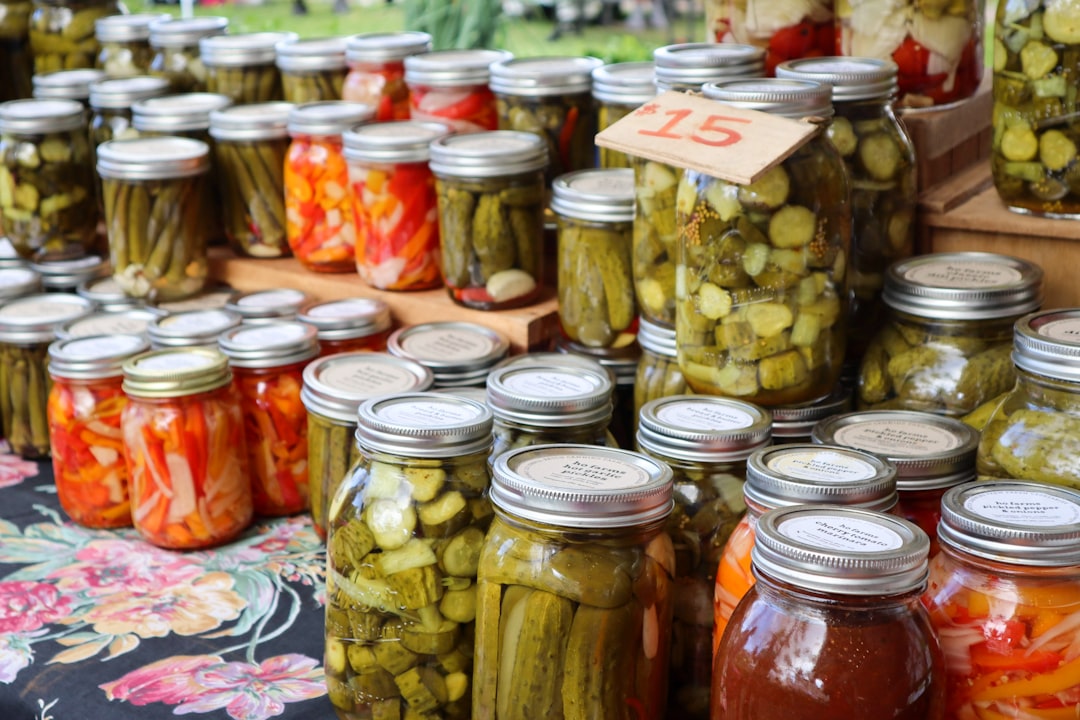
Normalized to a quart (32 oz), the math:
- Wildbrine 18 oz jar: roughly $14 per quart
- Wildbrine bulk 50 oz: roughly $7.40 per quart
- Farmhouse Culture 25 oz: roughly $9–12 per quart
- Costco/club bulk on either brand: usually the floor
Call this $8–$15 per quart, with $10 as a reasonable typical case.
Then add the trip. If you’re already at the store for other reasons, the marginal transport cost is essentially zero. If this is a dedicated stop, you’re paying for the fuel — small per quart, but real. Add to that the fact that most “fermented” products on the regular shelf aren’t actually raw; pasteurization eliminates the live cultures that make sauerkraut interesting in the first place, so the raw versions cost more because they actually deliver what the others only suggest.
Path 1 typical case: ~$10 per quart, near-zero time, fully loaded for one dedicated trip closer to $11.
Path 2: Conventional Grocery + DIY
Buy the cabbage, do the work.
A typical 2-pound green cabbage from a conventional grocery store runs $3–$5 depending on region and season. Eighteen grams of salt — the standard 2% of cabbage weight, which is the established ratio for safe lacto-fermentation — costs about four cents. The mason jar is two to three dollars, but it’s reusable indefinitely, so amortizing it across more than a year of use brings it under a penny per batch. A glass fermentation weight, optional but useful, is another three dollars one-time.
Yield per cabbage: about a quart and a half of finished kraut.
Running the numbers fully loaded: $2.00–$3.50 per quart in ingredients, plus roughly 20 minutes of active work — chopping, salting, packing — and a week or three on the counter while microbes do the rest.
The quality story is mixed. Conventional grocery cabbages are usually from cold storage and have traveled, which doesn’t ruin them as a ferment but tends to produce slightly less vigorous brine and less complex flavor than fresher cabbage. The probiotic outcome is the same: you’ll culture as many as 28 strains of lactic acid bacteria and end up with roughly a quarter of the daily recommended vitamin C per cup, made more bioavailable by fermentation. The cabbage that’s been on a truck since March is still going to give you a real ferment. Just a quieter one.
Path 2 typical case: ~$2.50 per quart, 20 minutes active labor.
Path 3: Farmers’ Market or Co-op + DIY
Where it gets interesting, and where the common-sense answer is partially wrong.
Are farmers’ markets actually cheaper than grocery stores? The honest answer: it depends on what you’re comparing. Multiple price studies, including a 2022 analysis published in the journal of the American Society of Nutrition and the Organic Consumers Association’s market-by-market comparison, show a consistent pattern: farmers’ markets tend to be more expensive than grocery stores for conventional produce, but less expensive than grocery stores for organic or pesticide-free produce. The premium attached to organic-certified produce in conventional grocery stores — still averaging about 52% above conventional in 2025, though that gap has been narrowing — frequently doesn’t apply at small-scale farms whose growing practices are organic-equivalent but uncertified.
So the framing is: if you’d otherwise buy conventional cabbage at the grocery, the farmers’ market will cost you more. If you’d otherwise buy organic cabbage at the grocery, the farmers’ market is often the cheaper option, and you’re typically getting produce harvested within 24–48 hours.
Food co-ops are a parallel option with their own math. Co+op Deals discounts run around 24% off retail on 3,000+ products, with Co+op Basics offering 30% off staples. Co-ops tend to be priced higher than conventional grocery on dairy and frozen, but lower on produce and bulk items, with twenty-three percent of an average co-op’s sales coming from local suppliers compared to about two percent for conventional grocers.
The realistic ingredient math for Path 3, sourcing cabbage at a farmers’ market or co-op: $3.50–$5.00 per quart of finished kraut, slightly more than Path 2 in dollars but using produce that’s measurably fresher and frequently better-cultivated. Throw in the transport: many farmers’ markets are weekly neighborhood events, often closer to home than a major grocery store, and many are walkable or bikeable. The transport line item that’s quietly eating Paths 1 and 2 can drop to zero on Path 3.
The thing the dollar math doesn’t capture is the community skill-sharing part. A farmers’ market is one of the few remaining places to put a face on the supply chain that feeds you. A food co-op is, structurally, a community-owned grocery store — your dollar stays much closer to home. Neither is a survivalist statement; both are practical adjustments that, over a year, can move both the budget and the community ties in the same direction.
Path 3 typical case: ~$4 per quart, 20 minutes active labor, transport often net-zero, plus quality and community gains the spreadsheet won’t show.
Path 4: Grow Your Own + DIY
The longest path, the cheapest path, and the path most readers can’t take — but for those who can, the math is unbeatable.
A packet of green cabbage seeds runs about $3–$4 and contains anywhere from 100 to 500 seeds, depending on variety. Cabbage takes 60–100 days to mature, tolerates light frost late in growth, and yields five to six full heads per 10-foot row under standard home-garden management. For a fall ferment harvest, you’d direct-seed in early July — which means this article is hitting at the right planning window.
Cost math: a single seed packet plus salt for a row’s worth of kraut, plus the time spent gardening, plus your existing garden space (which is, for current gardeners, sunk cost). Ingredient cost-per-quart approaches pennies. The honest accounting also includes time: starting plants, watering, weeding, pest management, harvesting — easily 10–15 hours over a season per crop, distributed across months.
What you get in return is not just cheaper kraut. It’s a productive vegetable bed that produces more than just cabbage; cucumbers, hot peppers, radishes, carrots, beets, garlic, green beans, and onions all ferment well, and a single garden bed can supply several months of preserved food across multiple ferments. The compound return on a $20 packet of seed assortments and a season’s work is, by any honest accounting, the strongest in the comparison.
Path 4 typical case: pennies per quart in ingredients, 10–15 hours of seasonal labor per crop type, requires garden space.
Side-by-Side, the Real Numbers
To put the four paths next to each other on the same units:
- Path 1 (buy raw kraut): ~$10 per quart, near-zero active time, full quality, modest-to-real transport cost depending on trip dedication.
- Path 2 (conventional grocery + DIY): ~$2.50 per quart, 20 minutes active, slightly weaker cabbage source, typically zero marginal transport on top of an existing trip.
- Path 3 (farmers’ market or co-op + DIY): ~$4 per quart, 20 minutes active, fresher and often organic-equivalent cabbage, transport often net-zero, plus the community/local economy gains.
- Path 4 (grow + DIY): pennies per quart, 10–15 hours of seasonal labor per crop, full control over inputs, requires space.
Within a single year of weekly kraut consumption — call it 52 quarts — the difference between Path 1 and Path 3 is roughly $300. The difference between Path 1 and Path 4 is closer to $500, before accounting for the lateral value of every other crop the same garden produces. None of these numbers move a household out of poverty by themselves. They do, however, get you better food, in better company, with a smaller fuel footprint — and they compound year over year as both produce and gas prices keep climbing.
If You Decide to Do This
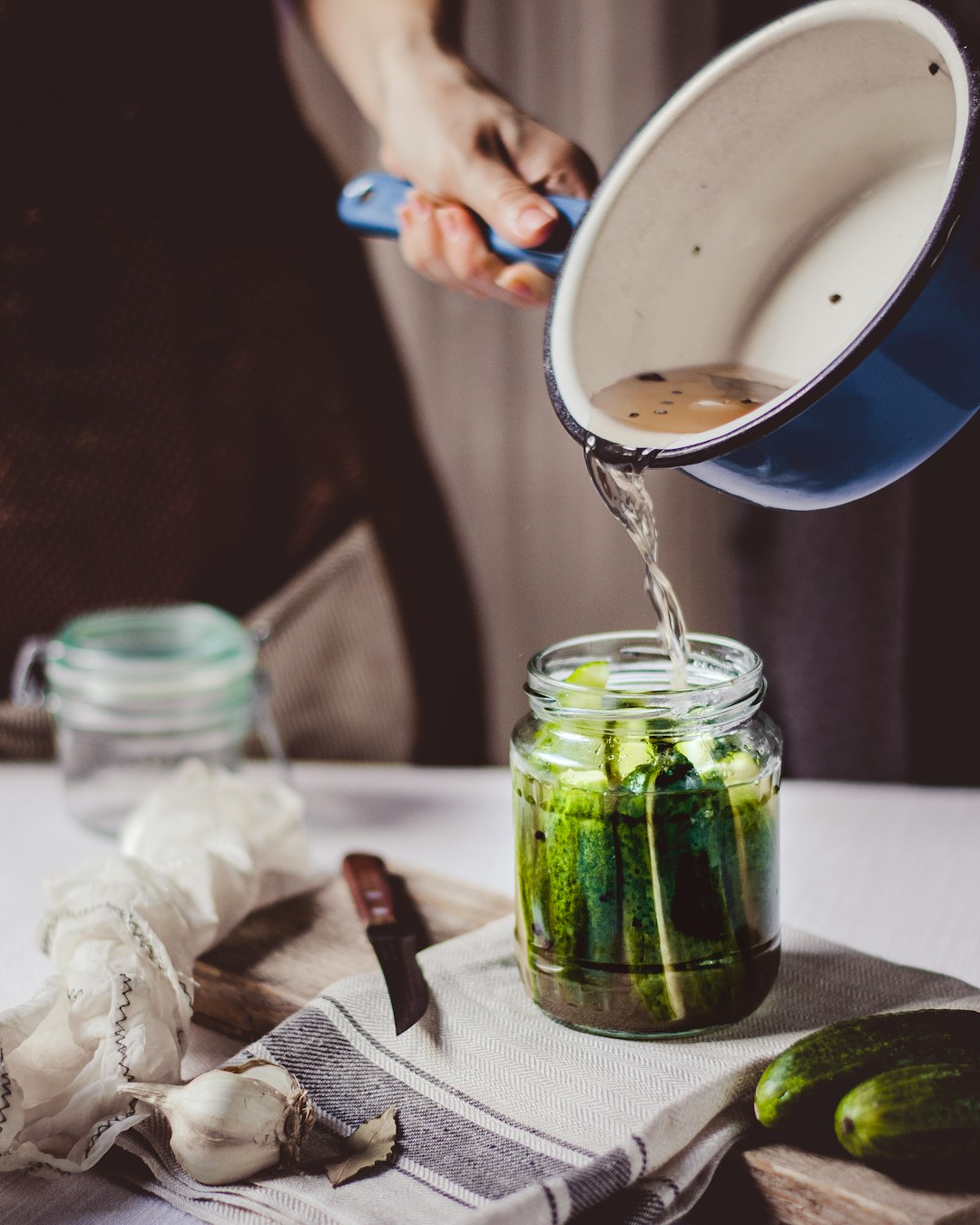
The recipe is short enough to fit in a paragraph. Shred a two-pound head of cabbage, mix it with 18 grams of non-iodized salt (2% by weight), and massage it hard for five to ten minutes until brine forms. Pack it tightly into a clean wide-mouth mason jar, making sure the brine covers the cabbage. Weight it down with a small jelly jar, a folded cabbage leaf, or a glass weight. Leave it on the counter, out of direct sunlight, at room temperature for one to three weeks, tasting periodically. Move it to the refrigerator when it’s tangy enough for your preference; it will keep there for six months and improve for the first two. Total active time is about twenty minutes. Total cost depends entirely on which path you took to get the cabbage.
 building a resilient kitchen counter with the lid and a fork resting beside it, lit by soft afternoon light.” class=”wp-image-207″ loading=”lazy”/>
The Bigger Picture: Community as Supply Chain
The honest argument for fermenting isn’t really about saving money. The savings are real, but the bigger return is structural. Path 3 in particular — sourcing from a farmers’ market or food co-op and finishing the work yourself — connects three things that the modern grocery industry has spent decades separating: the people who grow your food, the people who preserve it, and the people who eat it. Each link in that chain, made short and local, is a small piece of resilience. None of it requires a homestead or a six-figure budget.
For households with garden space, Path 4 closes the loop entirely. For households without it — and that’s most of us — Path 3 is, on every measurable axis, better than Path 1: cheaper, fresher, lower transport footprint, and woven into a community rather than a corporate supply chain. The default path, which is buying finished probiotic foods off a refrigerated shelf with a fuel-expensive grocery trip, is the worst option on every line of the spreadsheet except the one that says “time.”
Time, for the cost of twenty minutes a week and a five-dollar mason jar, turns out to be the cheapest thing you’ll trade in 2026.
Sources
- USDA Economic Research Service — Food Price Outlook, fresh vegetable inflation
- Grocery Dive — March 2026 produce price surge (lettuce, tomatoes)
- Food Dive — Upstream supply disruption driving 2026 food inflation
- Bureau of Transportation Statistics — Motor fuel prices, March 2026
- 101 Financial — Household impact of 2026 gas price increases
- Wildbrine — Raw organic sauerkraut pricing
- KQED Bay Area Bites — Store-bought raw sauerkraut comparison
- Olive My Pickle — Raw vs. pasteurized sauerkraut
- American Homebrewers Association — Primer on lactic-fermented vegetables (2% salt ratio)
- Cleveland Clinic — Sauerkraut and lactic acid bacteria strains
- Healthline — Sauerkraut nutritional benefits
- American Society of Nutrition (2022) — Farmers’ market vs. supermarket price comparison
- Organic Consumers Association — Price comparison of farmers’ markets, grocery stores, and co-ops
- LendingTree (2025) — Organic vs. conventional produce price analysis
- Co+op — Co+op Deals and Co+op Basics member discounts
- Money Crashers — Food co-op cost analysis
- Progressive Grocer — Food co-op local sourcing statistics
- University of Minnesota Extension — Growing cabbage in home gardens
- Iowa State Extension — Cabbage yield per row
Related reading
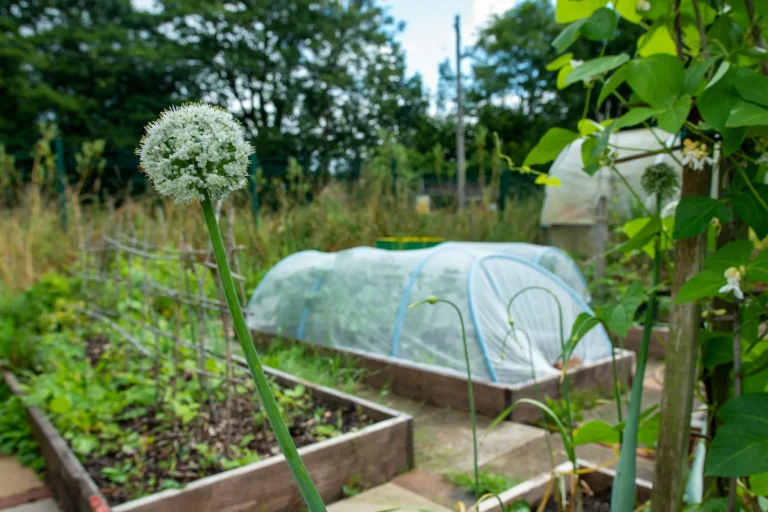
The Data-Driven Gardener: How Succession Planting Doubled My Yield
One 4-by-8 bed grew four pounds of food in a year, then 31 the next. Same soil, same sun, same gardener. The only change was …