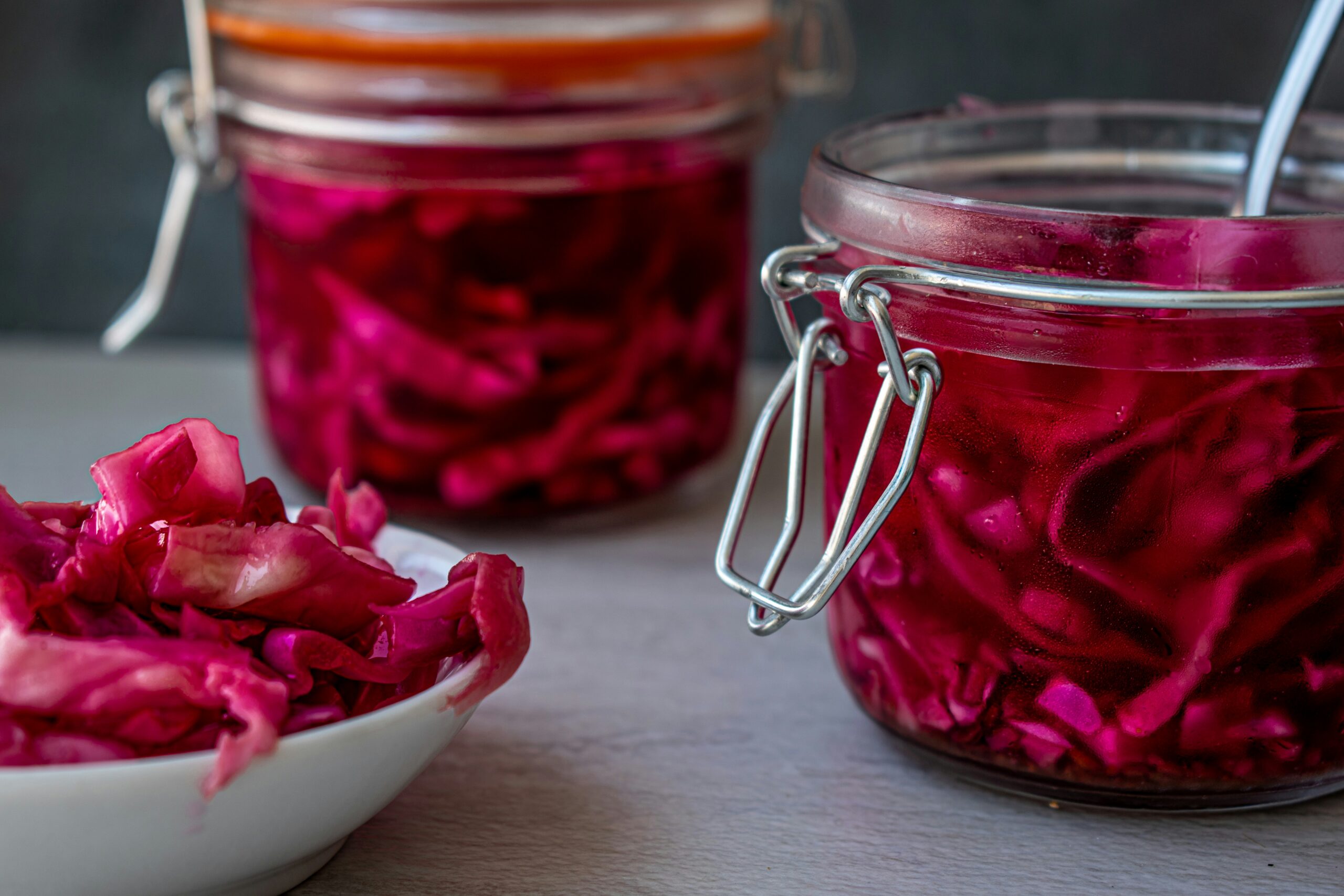
It’s 11pm and you’re standing over a jar of sauerkraut with a white film on top, phone in hand, typing “is this safe to eat” into a search engine. I’ve been exactly where you are. My first solo ferment was a batch of jalapeños that grew something fuzzy by day five, and I threw the whole jar out without knowing whether I needed to.
Most of us end up in one of two camps after that moment. Either we swear off home fermentation entirely, or we adopt the breezy confidence of the internet’s fermentation influencers: people have been doing this for thousands of years, trust your senses, everything is fine.
The actual research supports neither camp. Let’s look at what the USDA, the CDC, and the extension services actually say, because the answer turns out to be specific, learnable, and much less scary than the fear-mongers claim.
Two Ways to Get Fermentation Wrong
Fermentation advice fails in both directions, and both failures come from the same mistake: treating fermentation as a leap of faith instead of a system.
The fear camp treats every jar as a botulism time bomb. This is the Facebook commenter who responds to any sauerkraut photo with “you’re going to kill someone.” The evidence doesn’t support this. Properly executed vegetable lacto-fermentation has one of the strongest safety records of any food preservation method, and we’ll get to the CDC numbers that demonstrate it.
The folklore camp goes the other way: no measurements, no rules, just vibes and ancestral wisdom. This is riskier than it sounds, because fermentation safety rests on a handful of specific, measurable conditions. Get those right and the method forgives almost everything else. Get them wrong and “people did this for millennia” is not a rescue plan. People also died of food poisoning for millennia.
The middle path is boring, practical, and extremely reliable: understand the four conditions that make a ferment safe, control them, and then relax and enjoy the rest.
How a Ferment Protects Itself
The reason salted vegetables are safe is not tradition or luck. It’s microbiology, and it runs on a tight loop.
Salt does the first job. A brine of 2 to 3 percent salt by weight (up to 5 percent for some applications) suppresses the bacteria you don’t want while leaving lactic acid bacteria, or LAB, essentially unbothered. LAB are salt-tolerant acid producers, and they’re already living on the surface of the vegetables you bought.
The LAB then do the second job. As they metabolize the sugars in the vegetables, they produce lactic acid, and the pH of the jar drops. This is the number that matters. Clostridium botulinum, the bacterium behind botulism, cannot grow or produce toxin below pH 4.6. That threshold is the FDA’s own figure, documented in the Bad Bug Book. A healthy vegetable ferment driven by a proper salt level typically blows past pH 4.6 within the first several days at room temperature, and it keeps dropping from there.
Submersion is the third job, and it’s the one home fermenters actually fail at. Everything under the brine sits in an anaerobic, acidic, salty environment where spoilage organisms can’t get established. Anything that floats above the brine line meets oxygen, and oxygen is where mold and kahm yeast live.
Salt selects. LAB acidify. Submersion protects. Control those three things and the fourth variable, time, mostly takes care of itself.
The Four Rules That Actually Matter
Extension services like the University of Georgia’s National Center for Home Food Preservation and the USDA’s NIFA publish home fermentation guidance that boils down to a short list. Here it is with the kitchen translation.
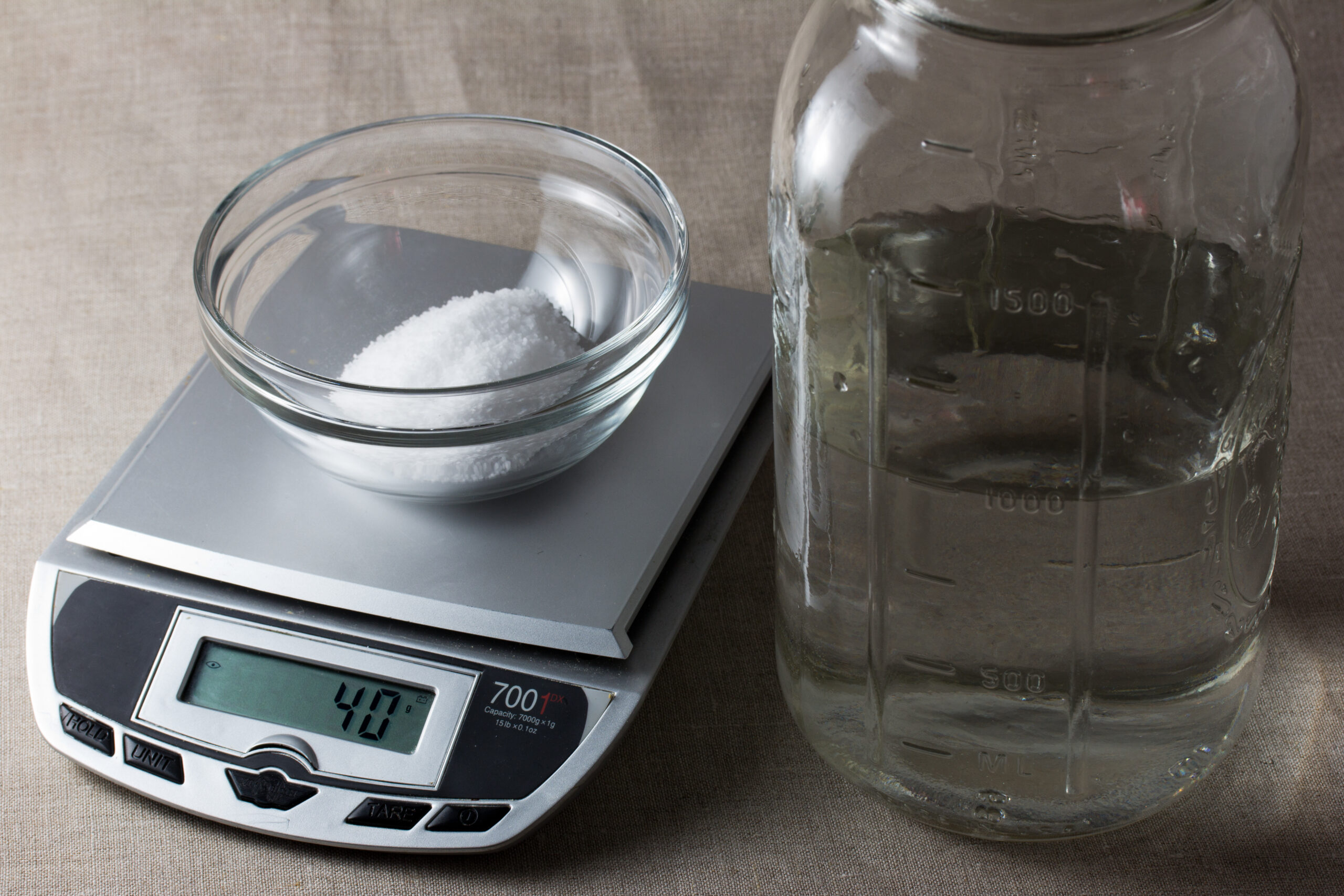
Rule 1: Weigh your salt
The 2 to 3 percent rule means grams, not tablespoons. A tablespoon of fine kosher salt and a tablespoon of coarse sea salt can differ by nearly half in actual weight, which is the difference between a crisp, safe ferment and a mushy under-protected one. Put your empty jar on a kitchen scale, tare it, add chopped vegetables, note the weight, and add 2 to 2.5 percent of that weight in salt. This takes ninety seconds and it is the single highest-leverage habit in home fermentation.
Rule 2: Keep everything under the brine
Most home fermentation failures trace back to floaters: a cabbage leaf, a pepper, a stray carrot coin riding above the brine line for a few days, growing mold that then seeds the batch. Glass weights solve this for a few dollars. A folded outer cabbage leaf pushed over shredded cabbage works too. So does an airlock. Different techniques, one principle: if it’s under the brine, it’s protected.
Rule 3: Mind the temperature
Roughly 65 to 75 °F (18 to 24 °C) is the sweet spot for most vegetable ferments. Warmer jars acidify faster, which is safe sooner, but they can go soft and develop off-flavors. Cooler jars ferment slowly and stay crisper. A jar fermenting at 85 °F in a summer kitchen isn’t automatically dangerous, but it demands tighter attention to salt and submersion, and it will taste different. Temperature is a quality dial more than a safety switch, within reason.
Rule 4: Give it time, and test if you’re unsure
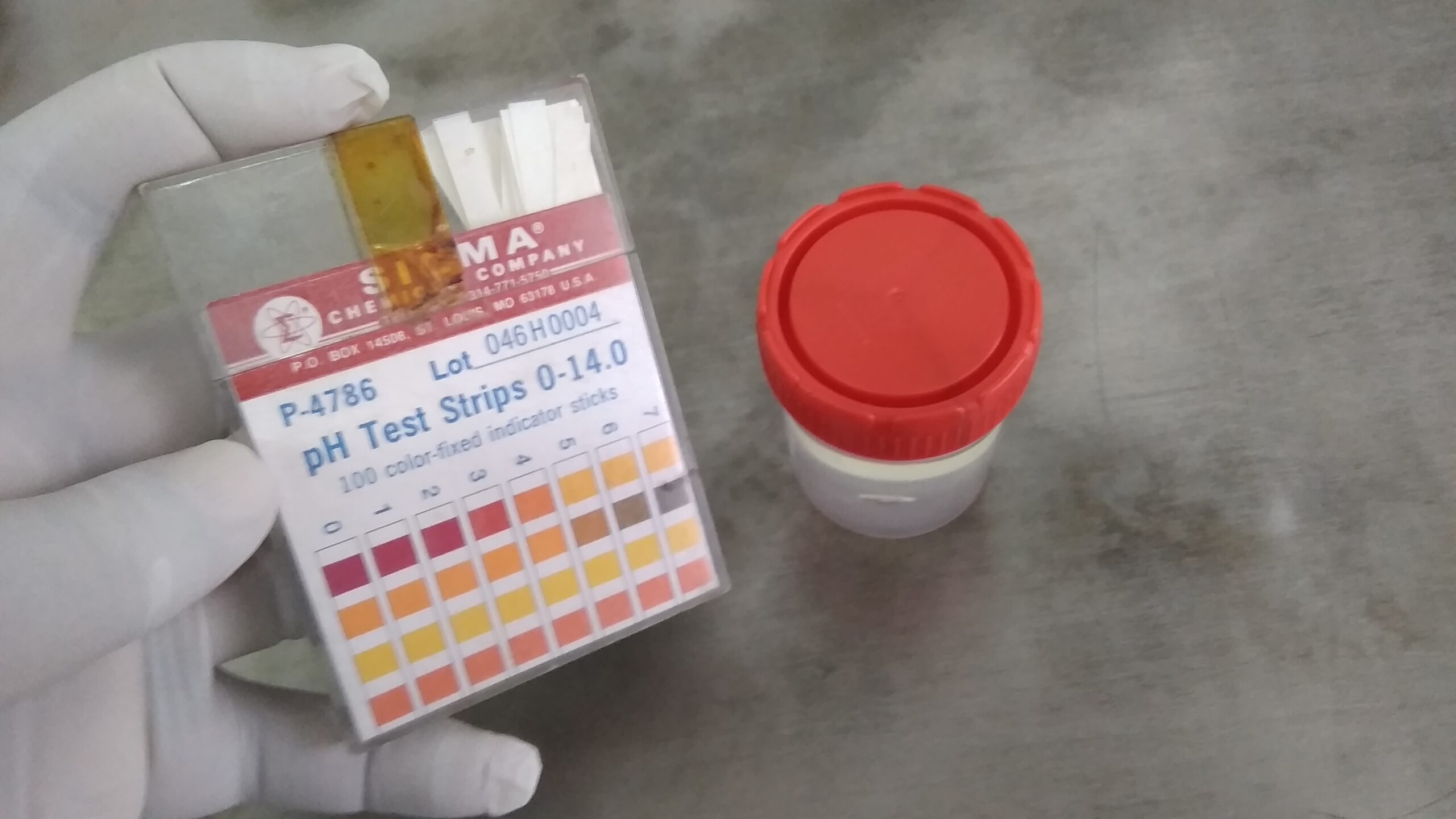
Day three does not taste like day ten. The early jar is actively bubbling and still climbing down the pH curve; a pH strip dipped in the brine (a few dollars for a pack of a hundred) will tell you plainly whether you’ve crossed 4.6. Once the ferment is sour to your taste and reading below 4.6, move it to the fridge, where the cold nearly stops the clock. For routine vegetable ferments with weighed salt and full submersion, strips are optional reassurance. For anything improvised, a low-vegetable brine, or a warmer room, they’re cheap certainty.
Notice what’s not on the list: sterilization theater, exotic equipment, or perfect technique. The rules are few because the system does the work.
Kahm Yeast or Mold: The Question That Decides Everything
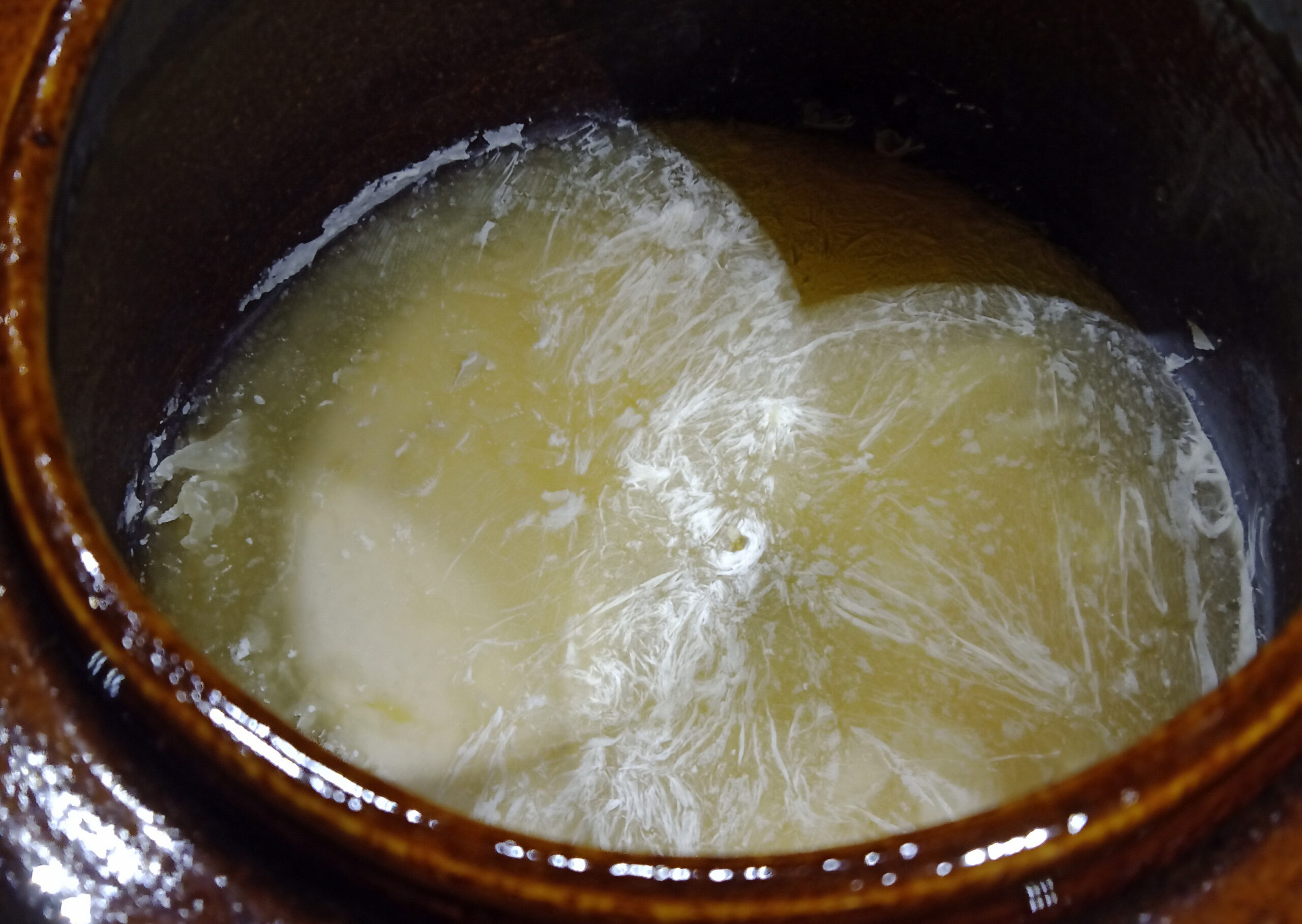
This is the 11pm question, so let’s answer it properly. The white film on your ferment is one of two things, and they have opposite answers.
Kahm yeast
Kahm yeast is a thin, white, wrinkled or powdery film that lays flat on the surface. It has no fuzz and no strong smell. It’s a yeast that shows up when a ferment is a little oxygen-exposed or a little warm, and it’s a quality problem, not a safety problem. Skim it off, make sure everything is back under the brine, and carry on. The batch underneath is fine, though kahm can add a slightly off flavor if it’s been there a while.
Mold
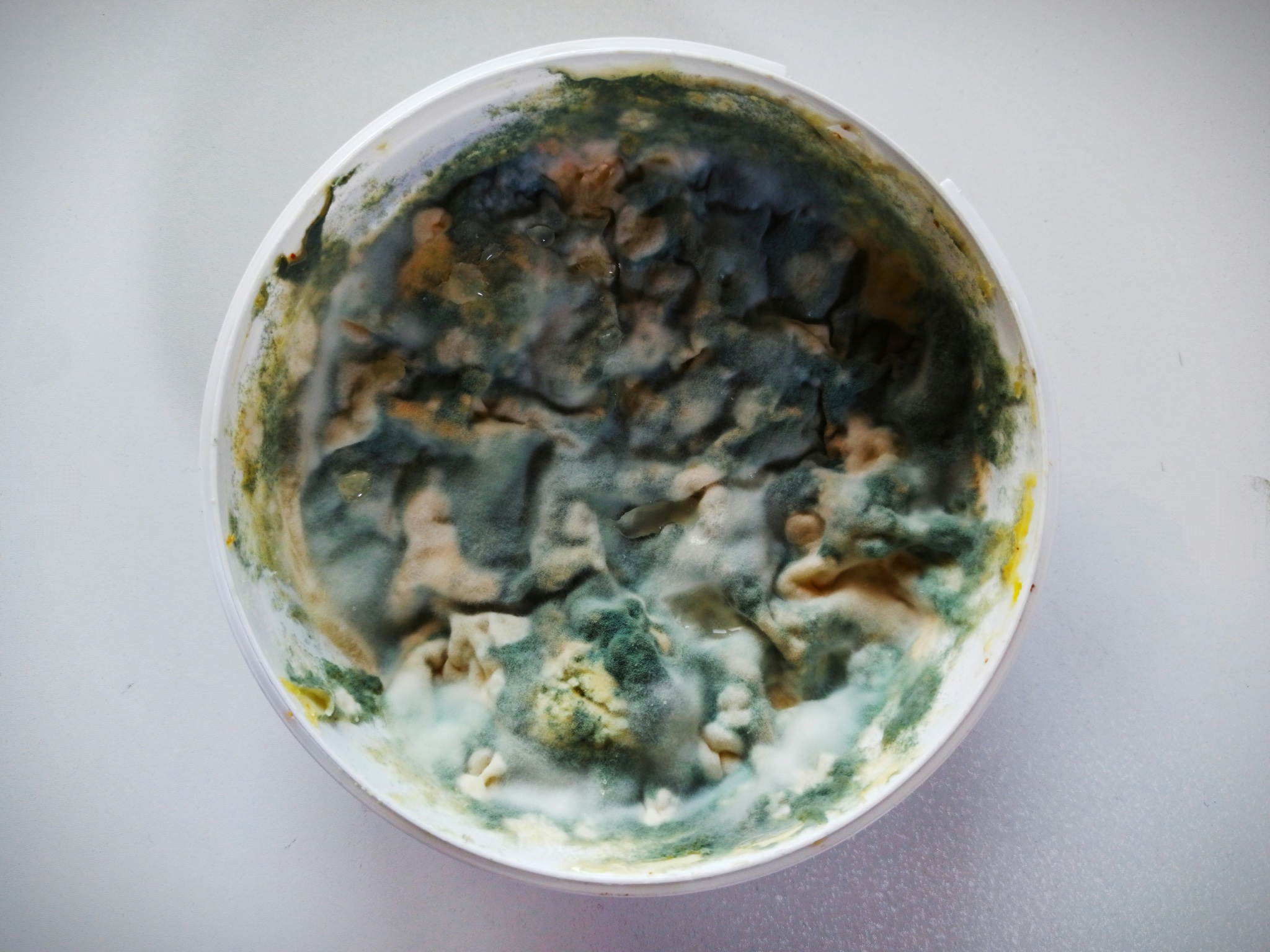
Mold is raised, fuzzy, and colored: green, blue, black, pink, orange. Here’s the rule with no exceptions: fuzzy means discard, always. The visible colony is not the whole problem. Some molds produce mycotoxins that can diffuse into the brine beyond what you can see, and scraping the top off a moldy ferment is not a safe salvage. A quart of cabbage costs about two dollars. A mycotoxin exposure costs a lot more than that.
If you genuinely can’t tell, treat it as mold. Kahm yeast is common, flat, and boring-looking. When in doubt, throw it out is not food-safety dogma here; it’s arithmetic.
What the Botulism Data Actually Shows
Botulism is the fear that drives most people away from fermenting, so it’s worth looking at the surveillance record directly rather than through the fear filter.
In 2021, the CDC’s national botulism surveillance logged 273 reported cases across the entire United States. Of those, 181 were infant botulism (a separate, gut-colonization phenomenon unrelated to home food preparation), and just 22 were foodborne. Foodborne botulism made up about 8 percent of cases.
Now look at what the foodborne cases were linked to. The CDC’s 2021 summary lists home-canned potatoes and sausages in Georgia, home-prepared seal oil in Alaska, and fermented beluga whale. Other recent years follow the same pattern: home-canned asparagus, home-canned peppers, commercially preserved foods, and traditional fermented aquatic foods from Alaska Native foodways, which carry a distinct and well-documented type E risk. What you will not find in the surveillance summaries is a case tied to a properly salted, fully submerged vegetable ferment. The record for brined sauerkraut and its relatives is essentially clean, and USDA-ARS microbiologist Fred Breidt’s research on fermented vegetable safety backs the mechanism: a well-managed lacto-ferment is one of the most microbiologically hostile places in your kitchen.
This doesn’t make botulism imaginary. It makes it specific. The genuine risk lives in home canning of low-acid foods, in garlic stored in oil at room temperature (make a fresh batch, refrigerate it, and use it within a week), and in fermented fish traditions outside the salt-and-acid system described above. Those deserve real respect. A jar of 2 percent brine cabbage does not belong in the same risk category, and pretending it does is why so many people are scared of a technique that has fed households safely for centuries.
When Something Goes Sideways
Most ferment problems are quality problems, and most have a readable cause:
| Symptom | Likely cause | What to do |
|---|---|---|
| White, flat, wrinkled film | Kahm yeast | Skim, re-submerge, carry on |
| Fuzzy or colored growth | Mold | Discard the whole batch, sanitize the jar |
| Slimy brine | Too little salt, or warmth | Check salt percentage; slimy ferments are usually safe at proper pH but unpleasant |
| Pink or orange tint | Yeast pigments, often in cabbage-family ferments | Usually harmless; verify with a pH strip |
| Mushy vegetables | Under 1.5 percent salt, or too-warm ferment | Eat soon or discard; a texture failure, not a safety failure |
| No bubbles after several days | Cold room, old vegetables, chlorinated water | Move somewhere warmer; let tap water sit out to off-gas chlorine, or use filtered water |
| Paint-thinner or nail-polish smell | Solvent-producing yeasts, usually with kahm | Discard; the flavor will not recover |
One row of that table deserves extra emphasis, because it surprises people: tap water. Chlorination strong enough to smell can slow or stall a ferment. The fix is trivial: leave a jug of tap water uncovered overnight and the chlorine off-gasses, or use filtered water. It’s a troubleshooting step, not a safety rule.
Why This Matters
Fermentation sits at the intersection of everything Living Method cares about: a skill that reduces dependence on industrial food, a practice that scales from one kitchen to a whole block’s cabbage harvest, and a safety record that rewards competence rather than equipment.
The fear camp is wrong about the risk, and the folklore camp is wrong about the reason it’s safe. The safety isn’t in the tradition. It’s in the salt, the submersion, and the pH, and those are things anyone can measure with a scale and a two-dollar strip. Master the four rules and the entire fermenting world opens up: sauerkraut, kimchi, pickles, and beyond into ginger bug sodas and home-brewed kombucha. We’ve run the cost math on homemade sauerkraut versus store-bought, and the jar wins by a mile.
Start with a two-dollar head of cabbage, weigh out 2 percent salt, keep it under the brine, and check the pH once if you’re curious. Three weeks later you’ll have a jar of live, probiotic-rich food that outlasts a power outage and cost less than the gas to drive to the store. Ferment with confidence, not complacency. The rules are the confidence.
A final note, because it matters: everything in this article reflects what the USDA, CDC, and extension services support when the conditions are met — weighed salt, full submersion, reasonable temperature. It’s general information, not personal safety or medical advice, and no guide can see inside your jar. Follow the rules, use your best judgment, and if a batch seems off, trust your senses over your sunk costs. The research makes fermentation reliably safe; the judgment call — and the responsibility — is yours.
Sources
– USDA NIFA — Safely Fermenting Food at Home
– National Center for Home Food Preservation — Fermentation
– CDC — National Botulism Surveillance Summary, 2021
– FDA — Bad Bug Book, Second Edition
Related reading
Growing Sprouts at Home: Seed to Sandwich in Five Days, at About $1 a Jar
The complete home sprouting guide: which varieties to grow, what they cost vs. retail, the 2026 safety rules, and how many jars a household of …

Using Trees to Heal the Land: Tree-Crop Permaculture by Climate Zone
Agriculture drove 86% of deforestation. The fix is the mirror image: the right trees in the right place, by climate zone, with the numbers to …
The Windowsill Herb Garden That Actually Produces: Light, Soil, and the 5 Herbs Worth Growing
Most culinary herbs want eight hours of direct sun a day; a winter windowsill gives a fraction of that. Measure your light first, then pick …