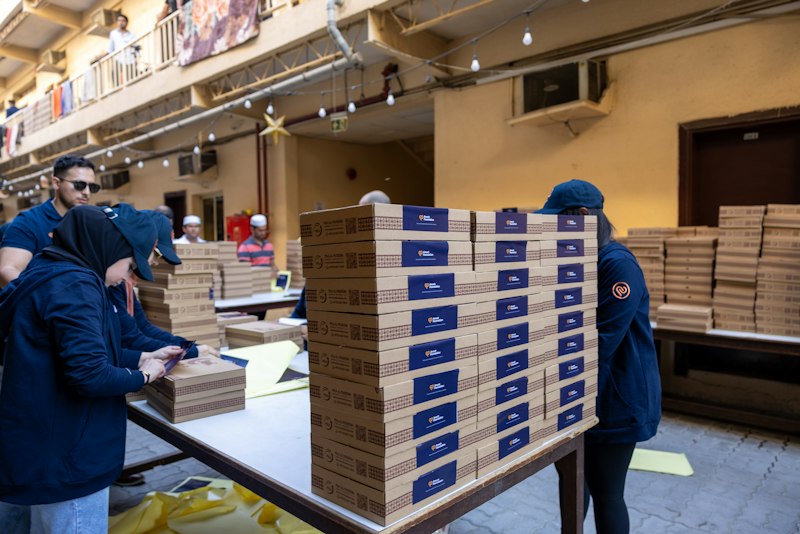
Grocery prices rose 0.5% in October, the fastest monthly jump since April, and the forecasts into early 2027 point in the same direction. There is a fix for the staple half of your cart that predates every inflation cycle: buy with your neighbors, at wholesale, once a month. Here is what it actually saves, and how delivery night works.
What One Order Actually Saves
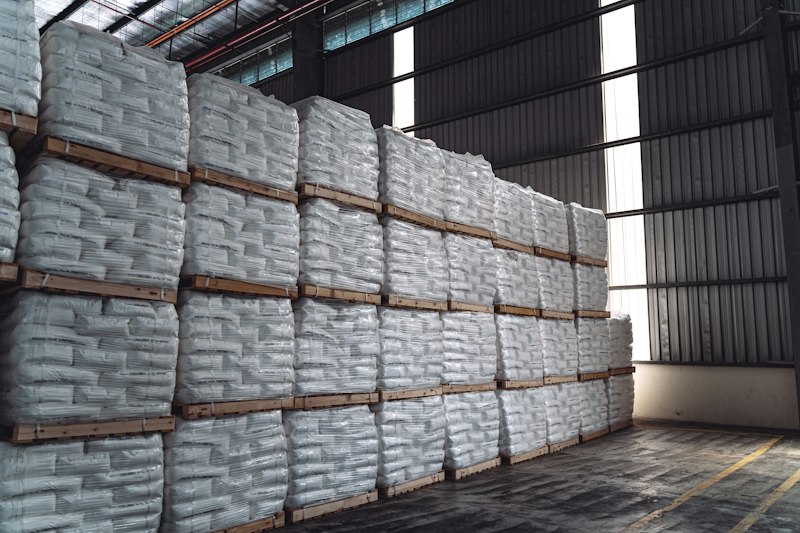
Start with the money, because the money is the argument. The table below prices six shelf-stable staples three ways: the everyday supermarket single, the biggest retail bag the same store sells, and what a club pays at case, pallet, or bulk-bag scale. Every price was checked on November 19, 2026, re-checked on November 24, and every source is linked.
| Staple | Supermarket single | Big-size retail | Club-scale bulk | Result |
|---|---|---|---|---|
| Long-grain white rice | $0.96 / 1 lb (16 oz bag, $0.96/lb, Walmart) | $11.57 / 20 lb ($0.58/lb, Walmart); $10.99 / 25 lb ($0.44/lb, Costco via costcofdb) | $35.99 / 50 lb ($0.72/lb, WebstaurantStore, ships freight) | 54% below single-bag price at warehouse scale |
| Rolled oats | $4.18 / 42 oz ($1.59/lb, Walmart) | none that competes | $30.82 / 50 lb ($0.62/lb, Azure Standard drop point) | 61% |
| All-purpose flour | $1.97–2.38 / 5 lb ($0.39–0.48/lb, Walmart) | retail already wins | $75.95 / 50 lb organic ($1.52/lb, Azure); organic wheat berries $64.22 / 50 lb ($1.28/lb) | organic upgrade, not a savings |
| Dry black beans | $1.54 / 1 lb (Walmart) | $2.88 / 2 lb ($1.44/lb) | $39.54 / 25 lb organic ($1.58/lb, Azure) | organic at conventional money |
| Canned diced tomatoes | $1.09 / 14.5 oz (7.5¢/oz, ALDI) | none that competes | $27.99 / 6 × #10 cans (4.6¢/oz, WebstaurantStore) | 39% per ounce |
| Granulated sugar | $2.50–2.97 / 4 lb ($0.63–0.74/lb, Walmart) | retail already wins | $27.99 / 25 lb ($1.12/lb, WebstaurantStore) | skip; counter-example |
Walk the rows and the pattern is clear. Rice: a single one-pound bag at Walmart costs $0.96; the 25-pound Kirkland bag at Costco runs about $0.44, and independent price checks over the past month put warehouse rice anywhere from $0.44 to $0.56 a pound. That is a 54% cut per pound, the club’s easiest win, since a 25-pound bag is exactly what one household can store and use. Rolled oats are the loudest number on the board: $1.59 a pound on the grocery shelf, $0.62 a pound in a 50-pound bag ordered through a drop-route bulk grocer like Azure Standard, a 61% gap corroborated by two independent price bloggers.
Canned tomatoes show what foodservice scale does: a case of six #10 cans, about 102 ounces each, costs $27.99 at restaurant supply, which works out to 4.6 cents an ounce against ALDI’s already-cheap 7.5 cents.
Now the two rows that lose, because a cost article that only shows wins earns exactly the distrust it invites. Conventional flour is already $0.39 to $0.48 a pound in a retail five-pound bag; no bulk tier beats that, and the foodservice 50-pound bag is not even close. The club version of flour is an upgrade, not a savings play: 50 pounds of organic for $1.52 a pound, roughly triple the conventional shelf price. The organic black-bean tier, at $1.58 a pound against $1.44 to $1.54 at retail, is the same shape with a smaller gap.
Sugar is the cleanest counter-example of all. A 25-pound foodservice bag at $1.12 a pound loses to the supermarket’s own four-pound bag at $0.63 to $0.74, because freight lands on the heavy stuff and retail sugar is a perennial loss-leader. Buy it at the supermarket. One more caution before ordering by the case: a case price is not automatically a discount. A 12-can case of a premium-brand 28-ounce tomato product at the same restaurant supplier costs more per ounce than the ALDI shelf can. Case math must be checked line by line, every order.
Add the six rows into one staples-heavy household basket (25 lb rice, 25 lb oats, 25 lb flour, 10 lb beans, six #10 cans of tomatoes, 25 lb sugar), buying each item at the tier where it wins — club-scale for rice, oats, beans, and tomatoes; retail for flour and sugar, the two rows the table already flagged — and the totals come to about $140 at everyday retail against about $96 bought the club way, with the beans upgraded to organic at the club tier. That is a computed 32% savings, not a promotional one.
The realistic reading of the table: count on roughly 25 to 40% off the shelf-stable half of your cart, with the exact number set by what your household actually eats, and treat any headline that promises a flat 30% off everything as what it is. The first order is also the break-even. A club needs scales, scoops, bags, a marker, and a spreadsheet: under $50 in shared gear. The real inputs are labor, about three hours a month per household in a fair rotation, and space, one garage evening a month.
This is the same line-item method this site used on homemade sauerkraut, where the jar beat the shelf by an even wider margin. If that math worked for you, this table is its bigger, baggier sibling.
Why Staple Prices Are Moving Again
The October 2026 consumer price index, released November 10, put food prices up 0.5% month-over-month, the sharpest monthly rise since April, per Reuters and CNBC; beef rose 0.9% and meats, poultry, fish, and eggs 0.5%. One quirk before you quote a yearly number at the dinner table: because October 2025 survey data were lost in the 2025 federal government shutdown, the Bureau of Labor Statistics could not publish an official 12-month grocery rate this cycle. The forecast side points the same way. At a November 12 briefing for the Food Industry Association, agribusiness economist Ricky Volpe said high energy costs and a developing very strong El Niño will likely keep grocery inflation above average into early 2027, per Grocery Dive. Diesel set a record $6.53 a gallon on September 22 and is still near $6.00, per AAA figures cited by The Independent; the Energy Information Administration expects $5.03 in 2027. NOAA puts the odds of a very strong El Niño at 96%, with rice, palm oil, cocoa, and coffee most exposed, and the World Bank’s October outlook projects global food prices up 10% this year and 7% next year. Nobody can put a firm number on how much of that reaches a US checkout aisle, and this article will not try.
The actionable point is narrower. The price of a 25-pound bag of oats on delivery day is one of the few grocery numbers your household can actually lock in, for months at a time, with no forecasting required. If you have read this site’s resilient kitchen piece, consider this the pantry half of that argument, scaled past one household.
What a Buying Club Is (and Isn’t)
A bulk buying club is five to twenty households that place one shared wholesale order and divide it on delivery day, in a garage, church hall, grange, or community center. It is not a store: nobody stocks shelves, marks anything up for strangers, or sells to the public.
It is not a CSA: you choose exactly what your household orders, week to week, instead of taking what one farm harvested. And it is not, yet, a co-op store, though clubs sometimes grow into one.
The CoFED guide hosted by NASCO and startabuyingclub.com describe four common structures: owner-run (one person operates it as a small business with a markup), member-only (members own it; fees cover overhead; the goal is maximizing member savings), worker co-op (members volunteer set hours for markups near zero), and farm-owned (a farm sponsors it). Nearly every neighborhood club is the member-only model or an informal hybrid of it, and nothing in this article requires more formality than neighbors who trust each other with a spreadsheet.
Finding Your People
Both playbooks list the same channels, in roughly the same order. Talk to vendors and shoppers at your farmers’ market; people there already take food seriously and many buy in quantity. Post in the community section of Craigslist and on Meetup. Mention it at smaller produce markets and church bulletin boards. And make the call every guide recommends: your county cooperative extension office, which works in agriculture and community organizing daily and often knows an existing club, or half a club looking for members.
Founding size is five to ten households. At that scale, one person can compile orders by email or a shared Google Sheet, and delivery-day splitting takes a handful of adults, not a volunteer army. The single rule that makes a club function is a hard order deadline: same day, same hour, every cycle, no exceptions for a cousin’s birthday. The deadline is the club’s constitution. Everything else, delivery windows, pickup order, payment timing, hangs off it.
Where the Food Comes From
There are three sourcing tiers, and most clubs mix them. National distributors offer the lowest prices and widest range, often with credit terms, but may require a commercial loading zone and your food travels farthest. Local distributors bring local product on smaller trucks and learn your club’s name, but many want cash on delivery and inventory swings with the season. Direct from the producer is freshest and most controllable, but plenty of farms will not deal in club-size quantities, payment may be due upfront, and delivery logistics are yours.
For rural and suburban readers, the modern national-distributor route is a drop-ship bulk grocer such as Azure Standard: you order online, and a scheduled truck route delivers to a volunteer host’s driveway or barn, a drop point, with a $5 handling fee on orders under $50. It is the lowest-friction way to get 50-pound bags and case lots without a loading dock. One practical note for any tier: foodservice freight to a residence can erase the discount on heavy items, which is exactly why the sugar row in the table loses. Check freight before you fall in love with a case price.
Order Night to Delivery Day, Step by Step

A monthly cycle has four beats, and each one is simpler than it looks.
Compile. Members submit orders against the deadline into a shared sheet. Assign one person to watch for the classic errors: wrong size tier, a product name that quietly changed, a price that drifted since the last cycle. Distributors mostly want orders electronically, as an email spreadsheet or a web form, and the better systems flag back-ordered items while you build the cart.
Submit and fund. The compiler totals the order, confirms it to the distributor, and collects member pre-payments. Pre-payment is the standard, and it is what funds the invoice, so no member’s groceries are ever floating on someone else’s credit card.
Receive. Someone meets the truck. For bigger orders a commercial loading dock helps; otherwise a garage or fellowship hall works fine. A receiving team of two or three cross-checks the delivery against the invoice, photographs and flags damage on the spot, and moves perishables to coolers first, always first.
Split. The core event. Gloves, scoops, bags, scales, markers, and printed split sheets, which are per-product lists of who bought what. Set a labeled box or bag per member up on chairs, your back will thank you by the third bag of rice. Run one or two weighing stations, divide the room between weighers and distributors, and check each item off the member’s receipt as it lands.
The CoFED playbook’s worked example budgets the splitting team 2 hours 15 minutes before pickup opens for a typical club order, which is a realistic planning number, not a heroic one. Then open the pickup line alphabetically, and double-check every box before its owner arrives.
The Money Part
Run pickup like a checkout line, even among friends. Announce payment options and the payee name in advance. Have one or more cashiers, plus a line triage person for the member who forgot their checkbook. Write everything down: member name, amount, cash, check, or card, and check numbers. Reconcile the same day, member payments against the distributor invoice, adjusted for shorted, damaged, or repriced items, and set a written loss threshold before the first order so a $4 discrepancy never becomes a friendship referendum.
Keep the club’s money separate from anyone’s grocery money. A dedicated club bank account is best; a transparent shared ledger, the spreadsheet itself or a bill-splitting app, works for a five-household club. Members pre-pay when the order is placed, so the club should never carry a balance beyond one cycle. If money ever sits between order and delivery at a scale that makes you nervous, that is one of the signals, covered below, that you have outgrown the informal model.
Keeping It Legal (Without Making It a Thing)
A neighbors-only club that collects pre-payments, orders at cost, and distributes at cost is, in most states, an unincorporated nonprofit association: no incorporation, no employer identification number, no board. University cooperative-development programs, including the University of Wisconsin Center for Cooperatives’ legal primer and Ohio State’s cooperative extension fact sheet, use exactly that framing for informal buying groups. The hygiene items are three: a one-page written agreement (order deadline, payment timing, pickup window, no-shows, damaged goods); a dedicated account or ledger; and no ongoing markup. Most states exempt raw grocery food from sales tax, which is why an at-cost, members-only club usually has no tax-collection duty. If the club ever marks up prepared or taxable goods, or sells at a public event, check your state department of revenue first.
And for perishables, the rule that matters on delivery day is the cold chain: meat, eggs, and dairy splits go home the same evening, in members’ coolers, with everyone understanding they share wholesale packaging, not retail-labeled product.
When does informal stop being enough? The signals are regular markup to cover rent or paid staff, holding significant member money between order and delivery, wanting liability protection, or dreaming about a storefront. At that point you are building a co-op, and the free federal primer is USDA’s Co-ops 101, with state cooperative statutes and the UWCC primer as the detail work. That is a future article’s worth of material. For the club you are starting this month, the one-page agreement is the whole job.
Beyond the Supermarket List: Meat, Produce, and Livestock Splits
Once the staple rhythm is working, clubs almost always branch out, and the playbooks document where: 50-pound produce crates in season, a quarter or an eighth of a steer butchered to order and wrapped for the freezer, pallet buys of canning jars, even shared orders of fermentation crocks and seeds for a neighborhood garden. This is where small clubs shine: a local distributor or farmer takes a ten-family club seriously in a way no single household can replicate, and the savings table stops being the point.
It is also where the care requirements step up. A steer split means hundreds of dollars per member due weeks before delivery, real freezer space, and cold chain on pickup night. Repackaged bulk food for members-only distribution is a different activity from selling to the public, and keeping that boundary bright, members-only, at-cost, is both the legal clean line and the food-safety one. The hands-on preservation side, what to do with a 50-pound crate of cabbage or a case of cucumbers, is covered in this site’s fermentation safety guide, and the cost logic from the first section of this article applies to jars and crocks the same way it applies to oats.
What Can Go Wrong

Every failure mode in the playbooks is boring, which is a compliment. Missed order deadlines kill clubs; the fix is the hard deadline, enforced kindly, forever. A member who does not show for pickup leaves a box and an unpaid balance; decide the policy in advance, typically donation or resale to other members within 24 hours, and write it into the one-page agreement.
Freight surprises land on foodservice orders shipped to a residence, which is why the table’s sugar row loses and why freight gets checked before every order, not after. Prices drift between order and delivery; the same-day reconciliation catches it, and the written loss threshold decides who absorbs it. And volunteer burnout ends more clubs than any price move: the standard fixes are a rotation so no one owns a job forever, and a small markup of 2 to 5% for clubs that outgrow pure volunteer labor. The playbooks endorse both.
The other failure is quieter: a club that orders things it will not use because the case price looked good. A 61% discount on oats only helps if your household eats oats. Order your own cart, at wholesale, and the math holds.
Why This Matters
Run the basket for a concrete household: a family of four with a staples-heavy month spends about $140 on the six items in the table at everyday retail. The same basket, bought the club way, costs about $96. That is roughly $44 a month, about $530 a year, before counting the produce and meat splits the basket does not even price, and the beans arrive upgraded to organic for the same money. Shelved and rotated, one club order is close to the two-week pantry buffer this site has recommended for normal life, restocked monthly at wholesale prices.
The inflation peg at the top of this article will be stale within a quarter, and the World Bank forecast may land or may not. The club works in cheap years too, because wholesale minus retail is a structural gap, not a weather event. One order a month, a hard deadline, a scale, and a spreadsheet: that is the entire infrastructure. Your move is a phone call to the cooperative extension office and a conversation with two neighbors who already buy rice twenty pounds at a time.
Related reading

Growing Sprouts at Home: Seed to Sandwich in Five Days, at About $1 a Jar
The complete home sprouting guide: which varieties to grow, what they cost vs. retail, the 2026 safety rules, and how many jars a household of …

Using Trees to Heal the Land: Tree-Crop Permaculture by Climate Zone
Agriculture drove 86% of deforestation. The fix is the mirror image: the right trees in the right place, by climate zone, with the numbers to …

The Windowsill Herb Garden That Actually Produces: Light, Soil, and the 5 Herbs Worth Growing
Most culinary herbs want eight hours of direct sun a day; a winter windowsill gives a fraction of that. Measure your light first, then pick …