
On November 16, the New Orleans City Council’s climate committee voted 3–0 to open the first big-city regulatory docket on plug-in solar, and the full council adopted the resolution three days later. Councilmember McCarron’s framing for the proceeding was renters: the devices, she said, “give renters and homeowners with unsuitable roofs a path to solar.”
The timing is not subtle. Connecticut utilities have filed for roughly 13% higher winter supply rates starting January 1. Duke Energy customers in North Carolina face increases of $6.53 to $9.62 a month in January, Tucson Electric bills rise just under $13 a month starting this December, and Maine’s standard offer supply rate resets January 1. Within five weeks, the bill pressure that makes a $375 share of a balcony solar kit interesting arrives in four states at once.
At least eight states have now signed plug-in solar into law, and trackers count as many as ten. More than thirty considered bills this year. What none of those laws say is how four apartments on one landing are supposed to split a single unit. That gap is the whole story, and it has four real answers.
The Short Answer, Up Front
Can four separately metered US apartments legally split the output of one plug-in solar unit today? No. Not through any utility program or statute at plug-in scale.
A plug-in device backfeeds whatever circuit it is plugged into, and that circuit terminates at exactly one meter. The electrons go to one apartment, full stop. Colorado’s H.B. 26-1007, signed this May, makes the constraint explicit: the law that set the national high-water mark at 1,920 watts also prohibits multiple plug-in units on a single circuit, because stacked inverters can hide a backfeed overload from the upstream breaker.

So the sharing happens at the money layer, not the electrons layer. If you read our guide to the plug-in solar laws earlier this year, this is the chapter it deferred: the hardware is legal, the wiring is one-meter, and everything below is about how neighbors divide the cost and the benefit around that fact.
Four Ways to Actually Share It
Ranked by formality, from a handshake to a utility tariff.
1. The host apartment plus a handshake. One neighbor mounts the kit on their balcony, on their meter. The other three reimburse a share of the hardware and, if everyone agrees, a share of what it generates. No legal framework covers this. It works on trust, and it breaks when someone moves out, which is why the written agreement below matters more than the panel brand.
2. Landlord or common-area hosting. The building owner installs on common property or provides host outlets, and the benefit flows through rent or a building agreement. Virginia’s HB 395, signed in April and effective January 1, 2027, is the first state law with landlord teeth: landlords who own more than four rental dwelling units cannot prohibit tenant balcony solar, per the enrolled text (HB 395ER, § 55.1-1212.1, checked November 25, 2026). A building of exactly four units sits just outside that protection. Maryland’s H.B. 1532 takes a different route, exempting systems under 391 watts from UL certification and building-alteration rules, which lowers the bar for small shared installs like this one.
3. Building-scale solar with credit allocation. This is “sharing,” formalized, and US utilities already run it. San Diego Gas & Electric’s Virtual Solar Billing Plan uses a four-unit apartment building as its own worked example: the owner is the generating account, and each unit plus the common area receives an assigned percentage of export credits, netted in 15-minute intervals, for a one-time $25 setup fee per account. The catch is scale. This is rooftop solar with allocation plumbing, not a $1,500 plug-in kit.
4. Community solar subscription. Renters buy a share of an off-site array and receive bill credits, no roof required. Twenty-two states plus DC had enabling policy as of August, with typical subscriber discounts of 5 to 15 percent. It is the least neighborly option on this list and the most legally boring, which for some buildings is the selling point.
How Germany Already Solved This
Germany passed Solarpaket I in 2024 and, in the same package, wrote the statute the US is missing. Over a million balcony systems are registered with the Federal Network Agency, with trade estimates running two to three times higher, so the problems of shared buildings arrived early and were answered in statute.

Three rules do the work. First, since October 17, 2024, a plug-in device is a privileged measure under § 554 of the civil code: the landlord must consent and can refuse only for genuine reasons like proven structural issues or monument protection, and no extra deposit is allowed. Second, the inverter is capped at 800 VA, modules at 2,000 watts-peak, and a standard Schuko plug is permitted up to 960 watts-peak of module power.
Third, and this is the one US readers will hit first: the power must flow to the tenant’s own apartment meter, never the building’s common electricity. Plug into the hallway circuit and you have donated your generation to the building community. German installers call this the most common technical question they get, and the rule validates the architecture above. Sharing is a contract, not a cable.
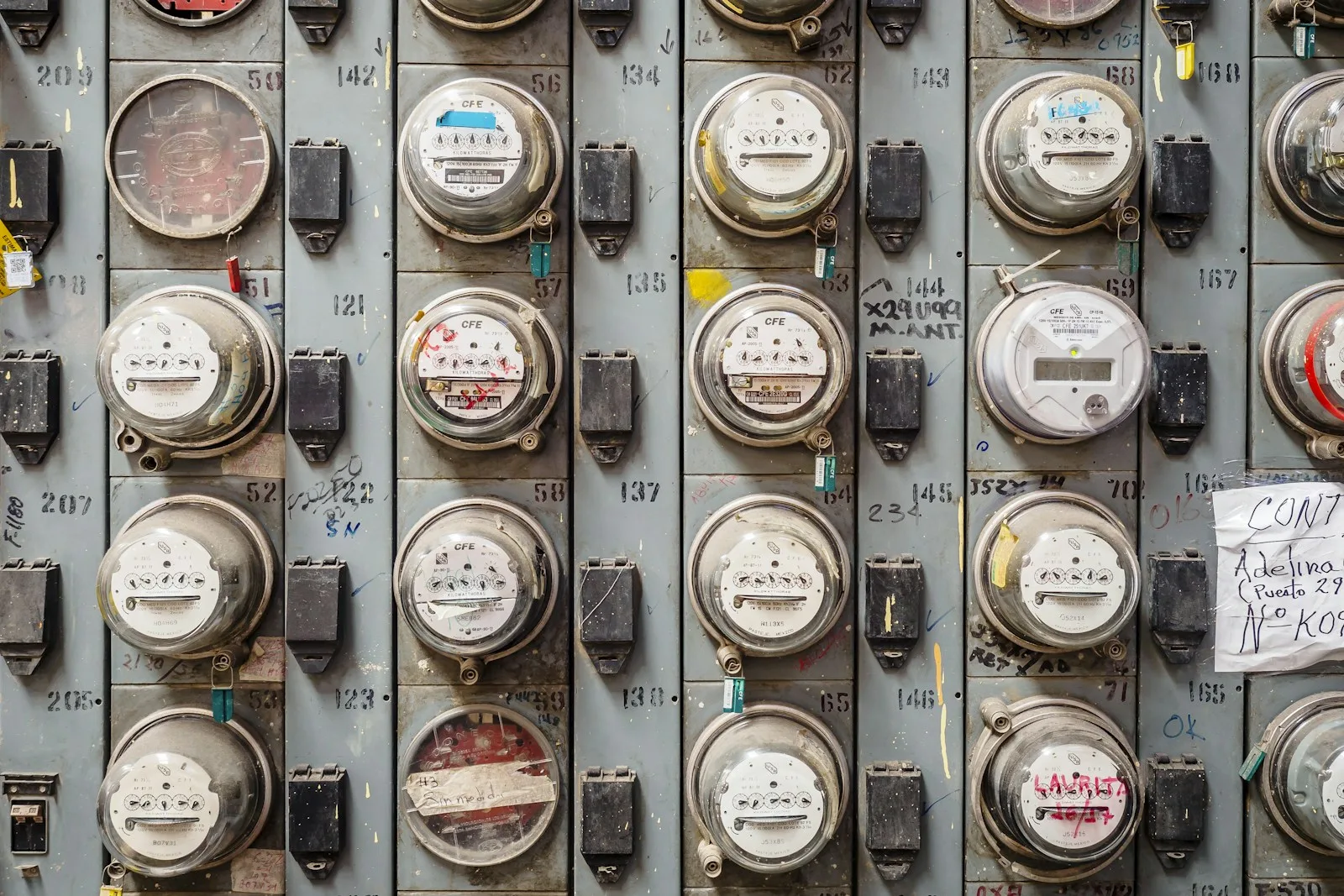
For buildings that want to go further, § 42b of the energy law created communal building supply: multiple households in one building share one array under a written contract that fixes an allocation key, meters every consumer in 15-minute intervals, and splits generation computationally, capped at what each household consumes. No utility involvement, no subsidy, no supplier license. Its sibling, § 42c, took effect June 1, 2026 and allows energy sharing through the public grid within a grid operator’s territory.
The German rule of thumb cuts the other way, though: below roughly six units, or about one kilowatt-peak per apartment, formal sharing costs more to administer than it saves. Metering, billing, and contract overhead eat the margin. That is precisely the gap the informal plug-in layer fills, and it is why the handshake model, fragile as it is, remains the right answer for a four-unit landing.
The Sharing Math
A $1,500-class kit divided four ways is $375 per apartment. The current US kit market runs from BigBlue’s POWAFREE H1 at $699.99 (800 watts plus a 2,560 Wh battery) through EcoFlow’s STREAM Ultra at $1,199, with zero-export systems like CraftStrom’s 800W unit at the $1,846.65 premium end. These prices were re-checked against live store pages on November 25, 2026, but kit pricing moves, so confirm before you buy.
The national average residential rate is 18.16 cents per kWh as of November, up from about 17.5 cents mid-year, and the winter filings above push several states well past it. An 800-watt balcony system in decent sun offsets a slice of a household’s usage, not the whole bill: think fridge, electronics, and part of the daytime load. The German anchor is a 600-watt Berlin system at about $530 saving roughly $100 a year, a five-year payback. US payback lands in the 3-to-10-year range depending on your rate and your sun, the same arithmetic we walked through for heat pump quotes.
The argument for sharing is not that four people use more power than one. It is that the fixed costs divide. The kit, the electrician visit for a dedicated circuit and proper receptacle where your state’s rules require one, the mounting hardware: split four ways, each household’s entry price drops under $400, and the payback clock shortens accordingly. What needs an agreement is the production side, because only the host’s meter sees the savings. Pick a structure: a flat monthly reimbursement, or a per-kWh price pegged to the local rate and trued up against the meter.
The Neighbor Agreement
No contract template exists for “three neighbors reimburse the fourth for solar,” so write your own, one page is enough. The same neighbor-economics pattern already works for groceries in our bulk buying club guide: small group, written terms, costs divided before anyone spends. Cover these points before anyone buys hardware:
- Host and ownership. Whose balcony, whose meter, whose name is on the kit. If the host moves, does the kit stay, get bought out, or get resold?
- Money. Flat fee or per-kWh, reviewed annually against the utility rate. Put the number and the review date in writing.
- Landlord consent, in writing. Even where the law is on your side, a paper trail ends arguments before they start.
- Insurance. Tell your renter’s insurer the system exists. Non-code-compliant installs can complicate a claim, and backfeed is invisible to the upstream breaker, which is exactly why certification matters.
- The safety baseline. UL 3700, the standard for interactive plug-in PV, published in late 2025 with its certification program launching in January 2026. The first certified product is Hoymiles’ HiFlow Pro microinverter, a component, not a full kit. Until full-system certification ships, buy from manufacturers pursuing it.
- State quirks. In Maine, DIY installs are capped at 420 watts; anything above requires a licensed electrician and 30 days’ utility notice.
When to Skip the Handshake
If your building has six or more units, or a cooperative owner, the plug-in layer is the wrong tool. The formal options scale better: a VSBP-style allocation plan through your utility, an owner-financed rooftop array with savings distributed per the NREL community solar models, or a community solar subscription at a 5 to 15 percent discount with zero hardware on the building.
One dead end to know before you pitch the landlord: master-metered buildings. HUD’s 2022 guidance on community solar credits applies only where the tenant pays the electric bill directly and the credit shows up as a negative line on the tenant’s own bill. In a master-metered building, how benefits reach residents is an owner question with no general answer, and most owners will take the simplest path, which is keeping the savings.
Why This Matters
The New Orleans docket is the first municipal proceeding aimed squarely at renters, and its schedule runs into spring: intervention motions are due December 18, position papers January 29. Whatever it produces, it marks the moment the regulatory conversation caught up to the hardware.
Until the plumbing arrives, the workaround is old-fashioned: a written agreement, a shared fixed cost, and one meter that four households have decided to treat as theirs. That is not a compromise. That is how every piece of shared infrastructure on your street got built, one handshake and one page of paper at a time.
Related reading
Heat Pumps in 2026: Real Install Quotes, Cold-Climate Performance, and the Payback Math
Real 2026 heat pump installs run $8,000 to nearly $19,000, more with ductwork and panel upgrades. Here is the median quote, cold-climate field data, and …
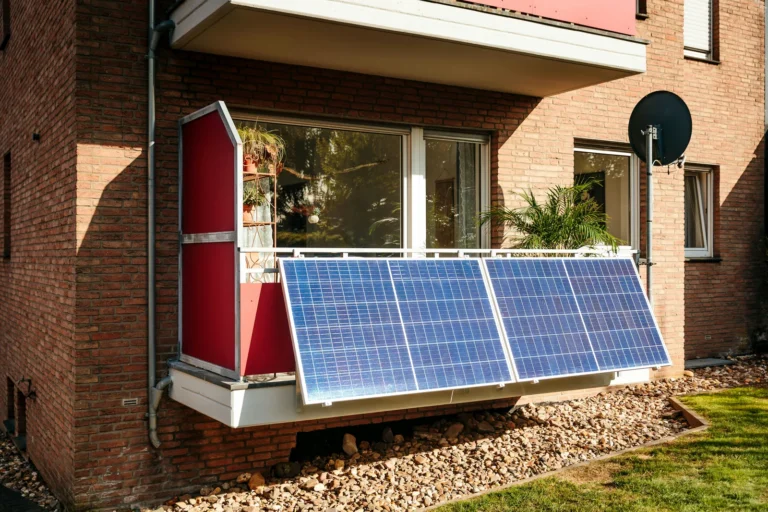
More Than 30 States Took Up Balcony Solar This Year. Here’s What 1,200 Watts Actually Powers.
Over 30 states considered balcony solar bills this year, carving out an appliance loophole for renters. Here is what 1,200 watts actually powers, real kit …

Why Middle East Tensions Drive Up Your Energy Bills (And 5 Projects to Cut Costs)
Your March 2026 utility bill might feel 20–30% higher than last year—and it's not your thermostat. The answer is 4,000 miles away, in a narrow …