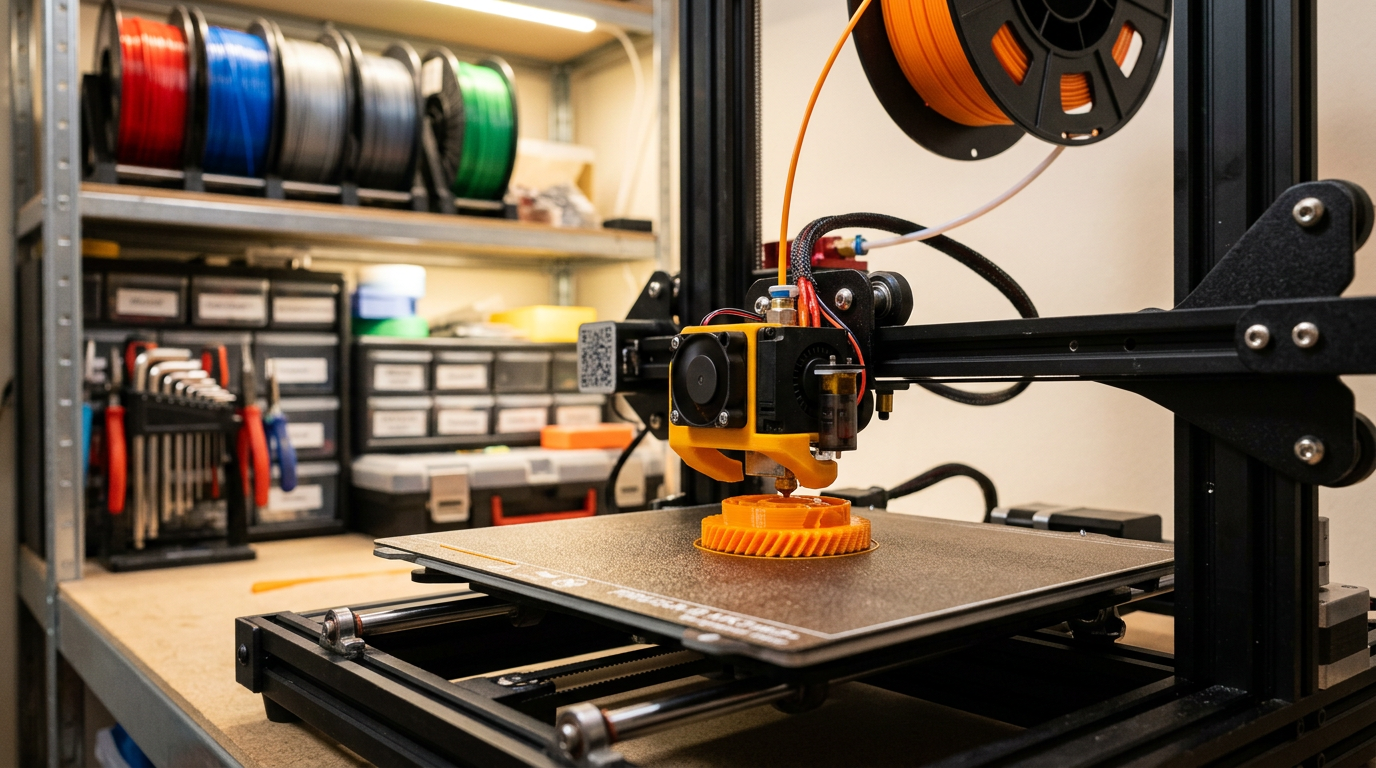
We’ve all been there. The plastic handle on a favorite appliance snaps. A crucial knob on the dishwasher breaks off. A child’s toy, once beloved, is now useless because of one tiny, irreplaceable plastic part. In our world of mass production, the answer is usually a sigh, a trip to the bin, and a reluctant purchase of a whole new product.
But what if there was another way? What if, instead of relying on global supply chains for simple objects, we could create them right here in our own communities?
This isn’t science fiction. It’s the reality of 3D printing, a technology that has quietly moved from the domain of niche hobbyists to become one of the most powerful tools for building stronger, more resilient, and more innovative communities. Forget flimsy toys; think of it as the new village blacksmith, a local printing press for physical objects, ready to solve real-world problems.
More Than a Machine: The New Local Workshop
At its heart, a 3D printer gives us the power to turn a digital idea into a physical object. This simple capability is revolutionary because it shortens the distance between having a problem and creating a solution to nearly zero.
It’s a direct challenge to the throwaway culture we’ve become accustomed to. It’s a tool that fosters ingenuity, self-reliance, and collaboration. When a group of neighbors can come together to design and print a solution, they aren’t just fixing a thing—they are strengthening the bonds between them.
A Glimpse of the Possible
Across the globe, this technology is already reshaping communities in profoundly practical ways.
Fixing the Farm, One Layer at a Time
In rural areas, a single broken part on a tractor or harvester can bring work to a standstill for weeks while waiting for a replacement. Today, agricultural communities are using 3D printing to create durable, custom replacement parts overnight. As documented by university extension programs like that of the University of Nebraska-Lincoln, farmers can download designs or create their own, getting vital machinery back online faster and more affordably than ever before.
Innovating in the Heart of the City
In our cities, 3D printers are becoming pillars of public innovation. Libraries across the world are transforming into keeping knowledge accessible offline/”>starting a community skill-sharing group makerspaces, providing public access to tools that were once out of reach. These hubs are a hotbed for learning and social good. They’re where a student can print a model for a science project, a local entrepreneur can prototype their next great idea, and volunteers can create life-changing devices.
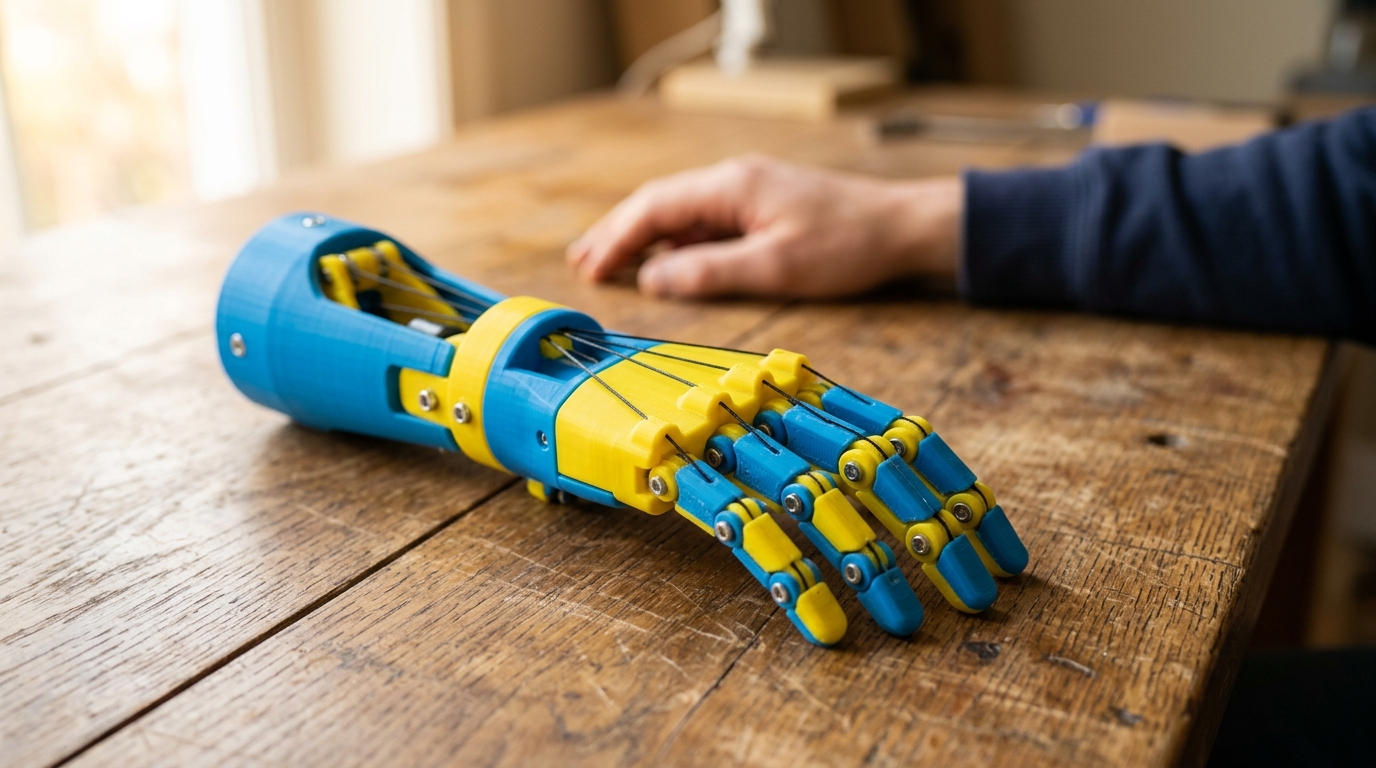
A shining example is the E-NABLE starting a community skill-sharing group, a global network of volunteers who use 3D printers to make and share free, custom-fitted prosthetic hands and arms for children and adults in need. It’s a powerful demonstration of technology used for radical, grassroots accessibility.
It’s Not Just Plastic
While most of us are familiar with the spools of plastic filament, the industrial wor arms are printing with carbon-fiber-reinforced composites to create custom factory tools. This industrial power is trickling down, making more durable and powerful solutions accessible at the community level.
The Story is Just Beginning
From a broken knob to a brand-new home, 3D printing is re-localizing production and putting the power of creation back into our hands. It offers a tangible way to build a more sustainable, self-reliant, and connected future, right in our own backyards.
The tools for change are here. Let’s learn how to use them.
Related reading
 The Connected Community
When the Grid Goes Down in a Heat Wave, the Cooling Center Won’t Save You. Your Neighbors Might.
When the power goes out during a heat wave, official cooling centers may be closed or dark. Here is a neighborhood plan that works when the infrastructure does not.
 The Connected Community
Community Mesh Networks: Your Guide to a Local Comms Grid When the Internet Goes Down
Picture this: a fierce summer thunderstorm rolls through, more intense than predicted. The power flickers and dies. You check your phone—no signal.…
 The Connected Community
A Practical Guide to Starting a Skill-Sharing Group in Your Community
In an age where we can connect with anyone online, our most durable connections are still local. A practical guide to…
Related reading
Starting a Neighborhood Tool Library, From Idea to Grand Opening
There are roughly 250 formal tool libraries operating across North America right now, about two and a half times as many as in 2018 and …

When the Grid Goes Down in a Heat Wave, the Cooling Center Won’t Save You. Your Neighbors Might.
When the power goes out during a heat wave, official cooling centers may be closed or dark. Here is a neighborhood plan that works when …
Community Mesh Networks: Your Guide to a Local Comms Grid When the Internet Goes Down
Picture this: a fierce summer thunderstorm rolls through, more intense than predicted. The power flickers and dies. You check your phone—no signal. The cell towers, …