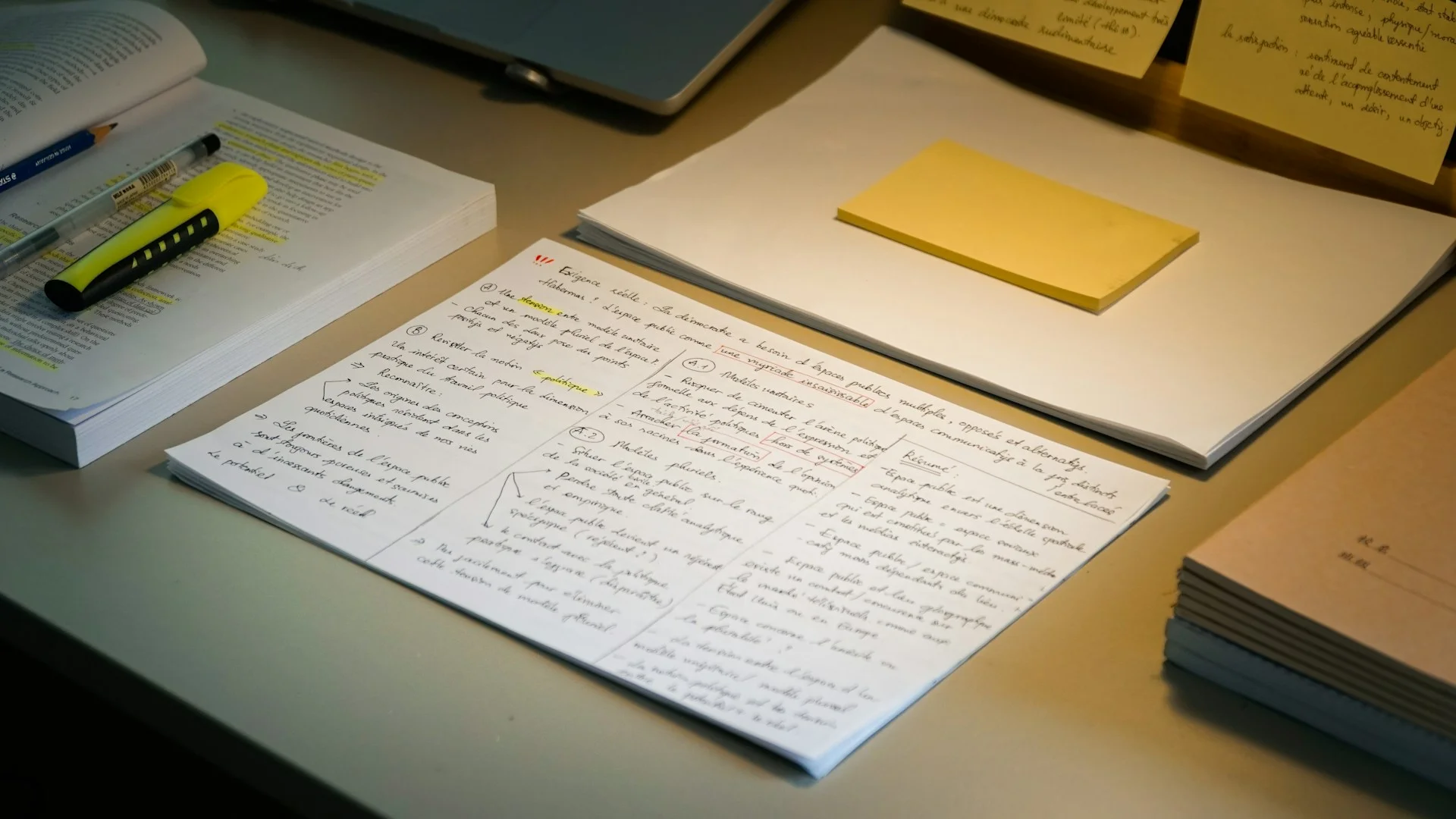
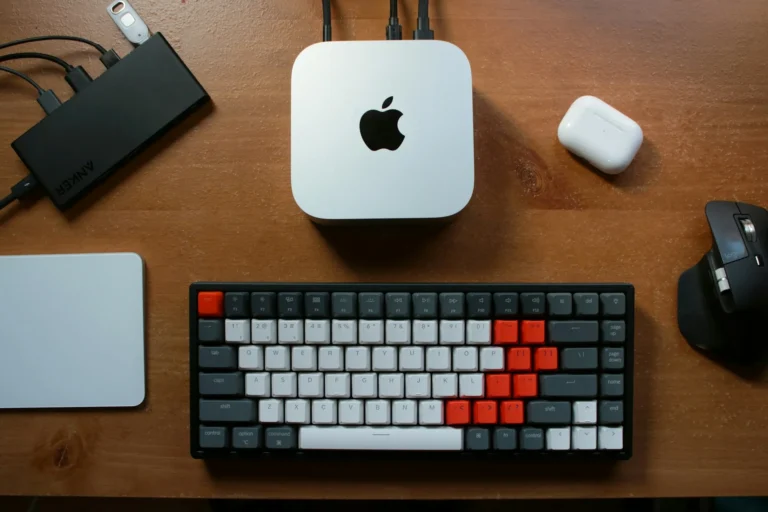
The local-AI question, reduced to its actual form: hardware, a notebook, and arithmetic you can check yourself. Photo: Yen Vu on Unsplash
This is Part 1 of a three-part series on whether running your own AI at home is worth it — the costs, the benefits, and the trade-offs.
Apple announced the M5 Mac Studio on August 25: $2,499 for a machine that runs a 120-billion-parameter model scoring within reach of the $200-a-month frontier. Pre-orders are live, the machines ship September 22, and the new Mac mini starts at $899, per Apple’s newsroom and launch-week coverage.
Apple also quietly confirmed the price-hike half of the story: the base Mac mini went from $599 to $799 this June, a 33% hike documented by price tracker J.D. Hodges and corroborated by 9to5Mac, with CEO Tim Cook telling the WSJ the hikes were “unavoidable” without naming a cause. The cause comes from reporting, not Apple: TrendForce attributes it to the same AI buildout straining the grid, with DRAM contract prices up 90–95% in a single quarter.
The escape hatch from cloud AI exists. The escape hatch is also repricing.
So here is the deal this article makes with you. The answer to “should I run local AI?” depends entirely on which of six readers you are, and for most of them, the honest answer is no. We will show you the arithmetic anyway, so you can check it yourself.
Find yourself in the table below. Then we’ll do your math.
Which of These Six Readers Are You?
This table is the whole article in miniature. Every verdict in it is a math problem with your numbers in it, and the arithmetic follows below.
| Who you are | What the cloud costs you (as of August 2026) | Does local win on cost? | Does local win on anything else? | Verdict |
|---|---|---|---|---|
| Casual user (chat, writing help, questions) | $0–20/mo, or $0.13–5 via open-weight API | Never: the hardware never pays back | Privacy, offline use, no meter running | Do not buy hardware. Keep the sub, or switch to a $1–5 open-weight API |
| Privacy-bound professional (lawyer, therapist, doctor, journalist, accountant) | Any | Irrelevant: compliance already decided | Decisively: the only architecture with no third party | Local, regardless of the math |
| Developer: light ($20–80/mo) | $20–80/mo | No: subscription or cheap API wins | Cap-free headroom, a lab to learn on | Cloud wins; local is a toy, not a saving |
| Developer: heavy interactive ($100–200/mo subs) | $100–200/mo | Usually no: local beats raw API (4–8 mo payback) but loses to the subsidized $200 Max plan | No weekly caps, no throttling, privacy | Hybrid: local for loops and boilerplate, cloud for hard agentic work |
| Developer: always-on agents (>500M tokens/mo) | $1,000+ API-equivalent | Yes, decisively: the one clean cost case | Flat, predictable cost | This is the person the M5 Studio is for |
| Small business (1–50 staff) | $50–800/mo typical; Ramp’s median business AI token spend is $2,246/mo | No below ~2M tokens/day or $5–10K/mo API spend | Compliance, flat-cost predictability | Sell yourself compliance, never cost arbitrage |
Now the beats, one per reader.
The casual user. If you chat, draft, and ask questions, even a heavy 1,000-message month, you burn roughly 700,000 tokens, according to token-usage analysis from iternal. At DeepSeek’s API rates ($0.14 per million input tokens), that is thirteen cents.
An $899 Mac mini never, ever pays that back. If local AI appeals to you, treat it as a sovereignty hobby, a good one, not a savings plan. Anyone who tells you otherwise is selling something.
The privacy-bound professional. If you are a lawyer, therapist, doctor, journalist, or accountant, this section is short because the decision was made for you. ABA Formal Opinion 512 and 25 state bars now govern what lawyers can paste into a chatbot. A federal court ruled in February 2026 (US v. Heppner) that AI chats carry no privilege.
No consumer chatbot tier signs a HIPAA business associate agreement, and IRC §7216 criminalizes unauthorized disclosure of tax-return data. For you, local isn’t cheaper; it’s the difference between “can use AI” and “can’t.” (The full receipts are in Part 2.)
The light developer. Viberank’s dataset of 800+ developers puts occasional users at $20–80 a month. An $899 Mac mini is roughly 45 months of Claude Pro at that burn rate, and the local models you’d run are weaker than the ones the subscription rents.
Cloud wins. Buy the mini because you want a lab, not because the math told you to.
The heavy interactive developer. You are the hardest call, and Section 2 is mostly for you. The short version: local hardware beats raw API pricing in 4–8 months at your volumes, but it usually loses to Anthropic’s $200 Max 20x plan, which is subsidized below API cost, which is exactly why Anthropic keeps capping it. The honest answer for you is hybrid.
The always-on agent operator. If you run background agents, eval loops, or CI pipelines past 500 million tokens a month, subscriptions are structurally unavailable to you (the caps exist to stop you) and your API bill runs $2,000+ a month in Viberank’s top always-on spend bucket (the $500–2,000 band is its power-user tier). You are the one decisive cost case for hardware. This article will not waste your time.
The small business. Typical automation bills run $50–800 a month, and four independent 2026 analyses converge on the same threshold: self-hosting wins on cost only above roughly 2 million tokens a day or $5,000–10,000 a month of API spend. Below that, the case for local is compliance and a flat, predictable bill, never cost arbitrage.
Every one of these verdicts is a math problem with your numbers in it. Here’s the arithmetic.
The Math, With Your Numbers in It
Scenario A: the casual user. A worked example: 1,000 chat messages a month is about 700,000 tokens, or ~$5.50 at GPT-4o-class API prices, and roughly $0.15–0.31 on DeepSeek V4 Flash at its current official rate card ($0.22 per million input tokens off-peak, $0.44 at peak cache-miss, re-checked against DeepSeek’s pricing page on September 3, 2026). Even against a $20/month ChatGPT Plus or Claude Pro subscription (OpenAI and Anthropic pricing pages, August 2026), an $899 Mac mini needs ~45 months to break even, while running weaker models.
Against DeepSeek, the payback is somewhere between ~250 and ~500 years depending on when you prompt: centuries, not years. The verdict is not “wait for prices to drop.” The verdict is never.
Scenario B: the heavy interactive developer. Anthropic’s own Claude Code documentation puts the average at $13 per active developer-day, or $150–250 per developer per month at API rates.
SemiAnalysis went further, estimating that a hard-used OpenAI $20 ChatGPT Plus plan extracts about $700 of API-equivalent compute, and a maxed-out $200 ChatGPT Pro plan up to $14,000. One tracked user burned 10 billion tokens in eight months: $15,000 at API rates, about $800 on Max subscriptions, per fast.io’s usage-limits guide.
That asymmetry is why Anthropic added weekly caps in August 2025, throttled peak hours in March 2026, and got hit with a class action on June 15, 2026 alleging the advertised 5x and 20x tiers collapsed under hidden limits.
So: against raw API spend of $500+/month, a $2,499 M5 Max Studio pays for itself in 4–8 months (our arithmetic from those sourced anchors, not an invoice). Against the subsidized $200 subscription, the flat math is ~12.5 months ($2,499 ÷ $200), longer once local running costs are counted, and only if you hit the caps. And every productivity-savings claim in this paragraph has to survive the verification tax, which we’ll price in honestly in The Honest Trade below.
Scenario C: always-on agents. Past ~500 million tokens a month, the math flips decisively. Realistic local cost lands at $1.04–2.67 per million tokens once hardware amortization and power are counted, against $2,000+ monthly API bills at Viberank’s “always-on” tier. Payback: 6–12 months, per iternal’s self-hosting threshold analysis.
But note the new floor: local no longer just has to beat Claude. It has to beat hosted open-weight APIs: GLM-5.2, cut to $0.97/$3.04 per million tokens on OpenRouter’s September 2026 listing, and DeepSeek V4 Flash at $0.22/$0.66 off-peak direct ($0.44/$1.32 at peak), per both vendors’ live pricing pages re-checked September 3, 2026. Local wins this tier on cap evasion, flat cost, and custody, not on dollars per token against budget APIs.
Scenario D: the small business. Ramp’s median business AI token spend is $2,246 a month; typical automation bills run $50–800. Below the ~2M-tokens-a-day line, the sticker price is the least of your costs: hidden TCO runs 3–5× hardware once setup hours, maintenance, model admin, and no-SLA risk are priced in.
There’s also a serving cliff: default Ollama saturates around 10 concurrent users, while vLLM reached 200 on identical hardware in a peer-reviewed MDPI benchmark. The documented win pattern is narrow and real: batch workloads on fine-tuned small models (a 1.6B model hitting 95%+ on invoice extraction, per the agentic-document-extraction project’s benchmark table on GitHub, carrickcheah/agentic-document-extraction), deployed for compliance and predictability.
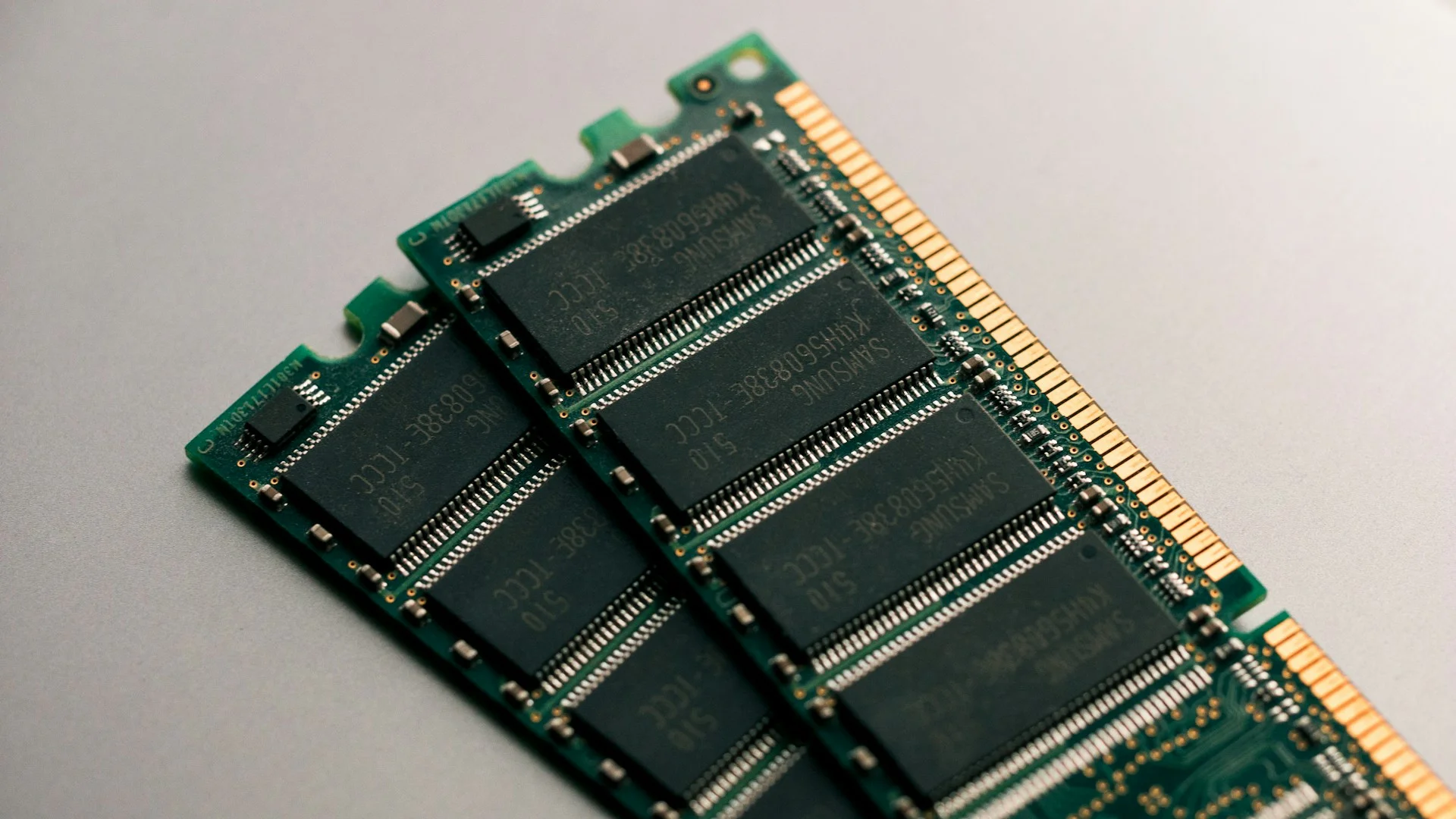
The rule-of-thumb box. Budget ~0.6GB of unified memory per billion parameters at 4-bit quantization, and use only ~70% of your RAM (ModelFit’s guide). That means a 24GB machine tops out around 27B, 64–96GB handles the 70B class, and 128GB runs the 120B MoE class. Speed is set by memory bandwidth, not TFLOPS: tokens per second is no faster than bandwidth ÷ model size in GB, and real speeds typically land at 0.5–0.7× that theoretical ceiling. Apple’s own figures run from 273 GB/s (M4 Pro) to 614 GB/s (M5 Max) to 1.2 TB/s (M5 Ultra), per fstoppers’ spec coverage.
What Your Machine Actually Runs
Hardware without a quality map is a shopping list. Here’s what the research says each tier genuinely handles, and where it falls over.
Solved on a $899 mini (7B–32B class). Summarization: 7B–10B local models are “competitive alternatives” to GPT-4-class models in human-judged news-summarization studies (arXiv:2501.18128), and a 39-model German public-sector benchmark found two of the top three summarizers were ≤20B models (arXiv:2606.13111). Translation: a University of Georgia study built for privacy-bound freelance translators found local 24B–32B models beat GPT-5.2 in 3 of 4 language directions on a single 24GB card.
Extraction: fine-tuned 1.6B–2B models hit 95%+ accuracy on invoices, training cost fourteen cents (per the agentic-document-extraction project on GitHub). And coding autocomplete: a 1.5B local model answers in ~150 milliseconds against the cloud’s ~300ms round trip, per the local-nim-coding-stack FAQ. Local wins that one.
The 27B sweet spot. Alibaba’s Qwen3.8-27B, an Apache 2.0 download that fits comfortably in 24GB, posts 61.7% on SWE-bench Pro, the contamination-resistant coding benchmark, above GPT-5.5’s 58.6% on CodingFleet’s leaderboard (vendor-reported scores; read gaps as directional). Epoch AI’s framing is the one to remember: models that fit on consumer hardware match the frontier of about a year ago. Last year’s frontier is a lot of machine.
The 120B tier, on a $2,499 machine. The most-cited evidence is GitButler’s bake-off (Scott Chacon, August 2026): 22 practical dev tasks in 6 categories, each run 6 times per model, across six local models and two frontier APIs, on an M5 Max MacBook Pro with 128GB, the same chip class as the new Studio. Nearly all of the larger local models came close to the frontier pass rate, with gpt-oss-120b and Meta’s Muse Glimmer posting the best speed-versus-accuracy cross-section of the local field. The honest ceiling from the same test: Claude Opus 5 was the only model that made no mistakes on any run, so “close” is not “equal.” Treat it as what it is: a single developer’s self-published test of bounded tasks. Useful signal, not gospel.
Measured speed on that chip (independent tester Alex Ziskind, March 2026): ~65 tokens/second on 120B-class MoE models, ~88 on 35B-class. That is faster than most people read.
The M5 Ultra, honestly labeled. No independent M5 Ultra benchmark exists; the machine ships September 22. What follows are bandwidth-derived estimates, not measurements: at 1.2 TB/s, roughly double M5 Max bandwidth, expect on the order of ~19–21 tok/s on dense 70B models and ~120+ tok/s on 120B-class MoE.
Estimates. We will rerun this section against real hardware the week independent numbers land.
One warning that deserves bold print: every “M5 Mac Studio” or “M5 Ultra benchmark” published before August 25, 2026 is fabricated. The machine did not exist. Research for this article found multiple sites, contracollective, presenc.ai, modelfit among them, running tidy performance tables for hardware that hadn’t been announced. Until independent post-September-22 benchmarks exist, all M5 Studio/Ultra performance figures anywhere on the internet are extrapolations from bandwidth physics, including ours. Any source that presents a pre-release “measured” M5 number as fact is lying to you, and you should close the tab.
The Part That Actually Matters: Where Local Falls Over
The gap that remains is not where the marketing says it is.
On vals.ai’s difficulty-sliced SWE-bench results, the biggest open-weight models match the frontier on sub-hour tasks, but the ≤30B models that fit on consumer hardware collapse to 31–38% on one-to-four-hour agentic tasks, against ~90% for the frontier. Microsoft’s SentinelBench analysis documents why: success decays exponentially with task length, a per-step error rate compounding like interest. Practitioners have internalized this, capping local agent loops at 10–15 steps, because local models lose the thread in long chains.
And what breaks interactive agent loops isn’t the speed number on the spec sheet. It’s time-to-first-token stacking across 30+ sequential tool calls: In one observed run, an agent took three times longer on a task from TTFT overhead alone. A model that decodes at 12 tokens a second is fine for an overnight batch job and miserable for pair programming.
The honest lag numbers: Epoch AI measures open weights about four months behind the frontier on public benchmarks. On METR time-horizon tasks the gap runs at about eight months at most, an upper bound, not a midpoint, and a 17-benchmark LessWrong analysis found the private-benchmark gap has been growing since January 2025. Your laptop runs last year’s frontier. It does not run next quarter’s.
The Honest Trade
Here is the honest trade at the center of running your own AI, and I’d rather state it plainly than sell you a fantasy. Three costs hide under the sticker price, and you should know all three before you buy anything.
The carbon math forbids the new purchase. Apple’s own Product Environmental Report puts a Mac Studio’s lifecycle footprint at 276 kg CO2e, 52% of it from production, meaning roughly 143 kg of CO2e is locked in before the machine answers its first prompt. The cloud prompt you’d displace costs 0.03 grams (Google’s measured median Gemini text prompt, market-based carbon, excluding training) to 1.14 grams (Mistral’s audited lifecycle figure for a 400-token response).
Dividing honestly: a new machine needs to displace somewhere between 125,000 and 4.8 million prompts to pay its embodied carbon debt, and that’s before counting the electricity the Mac itself draws. So the rule is absolute: never justify a new hardware purchase on climate grounds. The defensible paths are the machine you already own, or used gear: a used M2 Ultra Mac Studio with 192GB runs about $4,000–4,500 as of August 2026 (a synthesis of used-market guides), with 800 GB/s of bandwidth, nearly an M3 Ultra.
The verification tax is real, and it’s invisible to you. METR’s randomized controlled trial, the gold-standard study here, found experienced developers were 19% slower with AI assistance while believing they were 20% faster. A 39-point perception gap, caused by checking time nobody notices spending.
And 69% of the METR participants said they’d keep using the tools anyway: the tools make work feel better even when they make it measurably slower. Any “80% of the quality for $0” claim, including the ones in this article, is only true after you subtract the checking. Price it in.
You become your own security team. Researchers counted 175,000 Ollama servers reachable from the public internet across 130 countries by January 2026 (reported by The Hacker News), many actively exploited by “Operation Bizarre Bazaar,” the first documented marketplace reselling hijacked LLM access. JFrog found ~100 malicious models on Hugging Face executing reverse shells as soon as they load.
The rules are short: safetensors files only, pinned hashes, trusted sources, and never bind your server to the public internet. Sovereignty is not free. It is staffed.
Who This Is For, and Who This Is Not For
This is for you if you’re a privacy-bound professional whose compliance framework already answered the question; an operator running always-on agents past 500 million tokens a month; someone offline, air-gapped, or on a ship; or a hobbyist who wants the hobby, knowing it’s a hobby.
This is not for you if your monthly AI bill is under $50 and your data isn’t regulated. That sentence covers most people reading it. Keep your $20 subscription, or better, spend $1–5 a month on an open-weight API and pocket the difference.
Buying hardware to save money you weren’t spending is not autonomy. It’s shopping.
The Ranked List
If you do exactly one thing, do the first one. The order is the whole game.
1. Find your profile in the table above. The right answer is persona-dependent, not universal. Ten minutes of honest self-classification beats a thousand dollars of optimism.
2. Casual or light user? Skip hardware entirely. Open an OpenRouter account, add $10, and route to DeepSeek V4 Flash or a Qwen3.5-class model: $1–5 a month at real usage volumes, with OpenRouter charging 5.5% on top-ups and zero markup on tokens, per its official FAQ. This is the best-value move for most readers.
3. Running always-on agents past 500M tokens a month? Buy the hardware. The M5 Max Studio at $2,499, or the used M2 Ultra at $4,000–4,500 if you need the memory, pays back in 6–12 months at your volumes. You’re the one clean case.
4. Privacy-bound professional? Local is your only compliant option, full stop. The quality thresholds for drafting, summarizing, translating, and extracting over sensitive documents are met at 8B–32B. The workloads were never the problem. The architecture was.
5. Buying anything? Used or last-gen first, always. Never a new purchase justified on climate grounds. Section 4’s arithmetic is the reason, and it isn’t close.
6. Everyone else: try it tonight on the machine you own. LM Studio installs in about five minutes, no terminal, with one-click model downloads. An evening, not a weekend. You’ll know by bedtime whether local AI is your future or your fun fact.

What the Math Doesn’t Tell You
The math tells you whether leaving the cloud makes sense. It doesn’t tell you what you’re leaving.
Every prompt you’ve ever sent a consumer chatbot is logged, billed, and kept. And on May 13, 2025, a federal judge ordered OpenAI to preserve all of it, including the chats you deleted. By November, 20 million conversation logs were being prepared for production to plaintiffs.
So here’s your one next step: move 6, tonight, on hardware you already own. Five minutes, one download, zero dollars. Then read Part 2, because once you know what paying for the cloud costs you in custody and privacy, the table at the top of this article reads very differently.
Part 2 takes up what paying for the cloud costs you in custody, privacy, and power bills.
Sources
- Apple Newsroom: new Mac Studio with M5 Max and M5 Ultra
- J.D. Hodges: Mac price increase, June 2026
- 9to5Mac: Apple confirms price increases due to RAM shortage
- TrendForce: 1Q26 DRAM contract price surge
- DeepSeek API pricing
- iternal: token usage guide and self-hosting thresholds
- Viberank: State of AI Coding Spend 2026 (800 developers)
- Anthropic Claude Code docs: costs
- SemiAnalysis subscription-extraction math (via ZME Science)
- Fast.io: Claude Code usage limits guide
- OpenRouter models and FAQ
- Ramp: AI token cost benchmarks, April 2026
- MDPI Applied Sciences: benchmarking Ollama and vLLM
- ModelFit: how much RAM for a local LLM
- arXiv:2501.18128, news summarization with small models
- arXiv:2606.13111, MÖVE German public-sector benchmark
- arXiv:2605.31452, local LLMs for confidential translation (University of Georgia)
- carrickcheah/agentic-document-extraction (GitHub)
- CodingFleet: SWE-bench Pro leaderboard
- GitButler: local model performance on an M5 Max (the gauntlet)
- Alex Ziskind: M5 Max MacBook Pro deep dive (YouTube)
- vals.ai: SWE-bench Verified, difficulty-sliced
- Microsoft Research: SentinelBench
- LessWrong: How far behind are open models?
- METR: early-2025 AI developer productivity RCT
- The Hacker News: 175,000 publicly exposed Ollama servers
- Pillar Security: Operation Bizarre Bazaar
- JFrog: malicious models on Hugging Face
- ABA Formal Opinion 512 (PDF)
- Lawfare: AI and privilege after US v. Heppner
- S.D.N.Y. order directing OpenAI to preserve output logs (May 13, 2025, PDF)
- OpenRouter FAQ
Related reading
 Tech & Digital Resilience
You Can Run AI Without the Cloud. Here’s What That Gets You — and What It Doesn’t.
Training-data lawsuits, preserved chat logs, models retired on two weeks’ notice. There’s a reasonable question underneath all of it: can you use this technology without feeding the machine? Yes. Here’s the honest version.
 Tech & Digital Resilience
Self-Host Your Passwords with Vaultwarden: Every Premium Feature, Zero Subscription
Bitwarden doubled Premium to $19.80 a year and 1Password jumped 33% — while your vault still lives in someone else’s building. Vaultwarden runs the whole Bitwarden ecosystem on hardware you own: every premium feature, zero subscription.
 Tech & Digital Resilience
Pi-hole in a Weekend: Network-Wide Ad Blocking for Every Device You Own
Your smart TV is phoning home to ad servers, your phone apps are reporting to analytics endpoints — and neither can run an ad blocker. A Pi-hole fixes that at the network level for every device you own, in one evening, for less than a takeaway dinner.
Related reading

What to Download Before the Internet Goes Down: Building Your Offline Library
A curated download plan for your offline knowledge server: which Wikipedia packs, repair guides, and free libraries to grab first, with real file sizes and.
You Can Run AI Without the Cloud. Here’s What That Gets You — and What It Doesn’t.
Training-data lawsuits, preserved chat logs, models retired on two weeks' notice. There's a reasonable question underneath all of it: can you use this technology without …
Self-Host Your Passwords with Vaultwarden: Every Premium Feature, Zero Subscription
Bitwarden doubled Premium to $19.80 a year and 1Password jumped 33% — while your vault still lives in someone else's building. Vaultwarden runs the whole …